Why Long-Term Trust Building Outperforms Fast-Twitch Paid Ads in 2026
For the last decade, entrepreneurs have been told that speed is the ultimate advantage. Launch fast. Test fast. Scale fast. Buy traffic. Buy attention. Force visibility. The industry conditioned founders to believe that paid reach equals real growth.
But the market has shifted, and consumers have changed with it.
In 2026, buyers are more skeptical, more discerning, more distracted, and more research-driven than ever. They are flooded with AI-generated content, manipulated by algorithms, and targeted by relentless ad cycles. The result is simple: people no longer trust interruption. They trust permission.
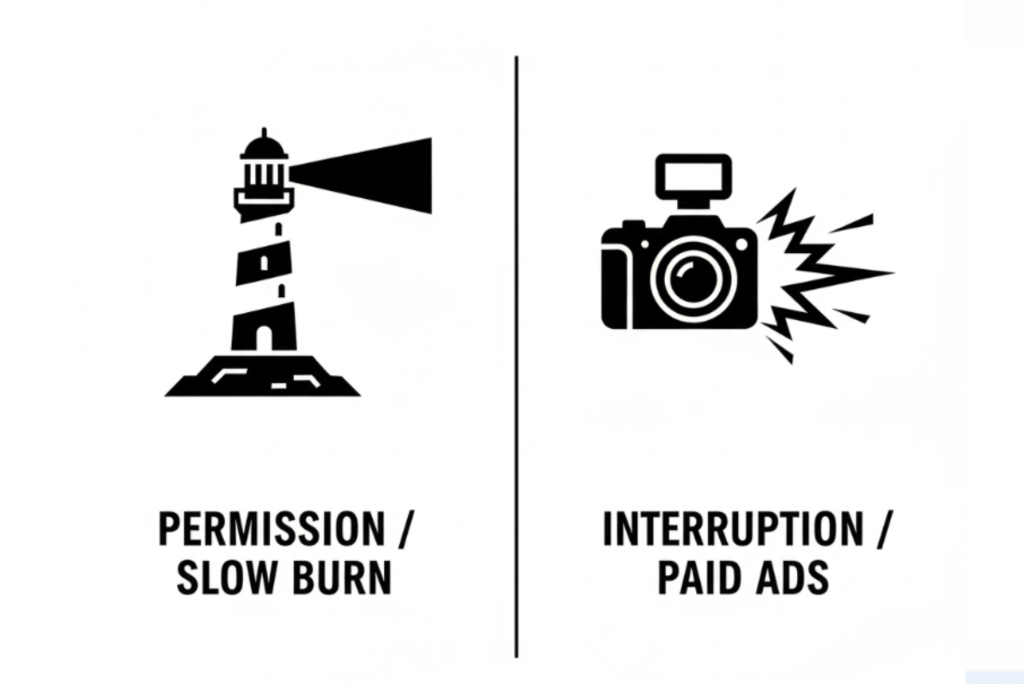
This is the foundation of Permission-Based Marketing, a strategy built on earning attention, not renting it. Slow burn brands, the ones built through consistent organic content, email newsletters, PR, thought leadership, and long-term nurture ecosystems, are outperforming fast-twitch, ad-first brands across nearly every metric that matters: conversions, retention, lifetime value, referrals, and reputation.
Founders who still rely exclusively on “quick wins” are discovering that the new economy has no tolerance for rushed relationships.
Permission is the new currency.
Trust is the new algorithm.
And longevity is the new growth metric.
Why Paid Ads Are Losing Their Dominance
Paid ads aren’t dead. They are simply no longer enough.
Ten years ago, paid traffic served as a shortcut. When attention was less fragmented, a strong creative, some urgency, and a decent offer could carry a business through a full sales cycle.
Today, paid traffic faces three fundamental problems:
1. Consumer skepticism is at an all-time high.
People know when they are being sold to. They recognize ad frameworks instantly. They understand scarcity tactics. They tune out hype.
2. AI has created a sea of identical content.
Most ads sound the same because they are produced using the same tools, the same prompts, and the same templates. When differentiation disappears, cost of acquisition rises.
3. Paid traffic struggles without pre-existing trust.
Cold audiences now require far more context before converting. Without an ecosystem to support them, the funnel collapses.
This is why we wrote:
Why Your Paid Ads Launch Failed Before It Ever Began
Visibility without trust no longer converts.
Traffic without permission no longer persuades.
The Psychology Behind Permission-Based Marketing

Permission-based marketing works because it mirrors how humans naturally build relationships: gradually.
People trust brands the same way they trust people.
They judge consistency.
They observe behavior.
They evaluate values.
They gather enough evidence to feel safe.
This is not a fast process, but it is a durable one.
When a buyer opts into your world, opens your emails, consumes your content, reads your long-form posts, attends your webinars, follows you on social media, they are giving you permission to influence their thinking.
That permission compounds over time and creates:
• emotional safety
• familiarity
• authority
• narrative alignment
• brand loyalty
This is what we describe as the “connection layer” in:
Why Most Funnels Don’t Fail at Conversion, They Fail at Connection
Connection is built through accumulated trust, not single interactions.
Slow Burn Brands Are Winning Because They Play a Different Game
Brands that embrace permission-based marketing rarely go viral overnight, but their growth is healthier, more predictable, and more profitable.
Slow burn brands:
- Invest in long-form authority
They create blogs, podcasts, and educational content that builds credibility. - Build nurture ecosystems
Email newsletters, automated sequences, and recurring touchpoints keep them top of mind. - Prioritize message clarity over trend chasing
They don’t pivot every week. They reinforce core themes until their audience internalizes them. - Share values, not gimmicks
They speak to worldview alignment and psychological drivers, not cheap hooks. - Maintain visibility across multiple surfaces
They utilize social platforms, PR, SEO, and partnerships, not as a frenzy, but as a rhythm.
These brands play the long game, and because of that, they build something most businesses never achieve: brand gravity.
Brand gravity is when your audience begins coming to you instead of you chasing them.
Why Email, Newsletters, and PR Are Back on Top
We’re experiencing a return to fundamentals. The newest generation of entrepreneurs is discovering what the veterans already know: email and organic content built empires long before ads existed.
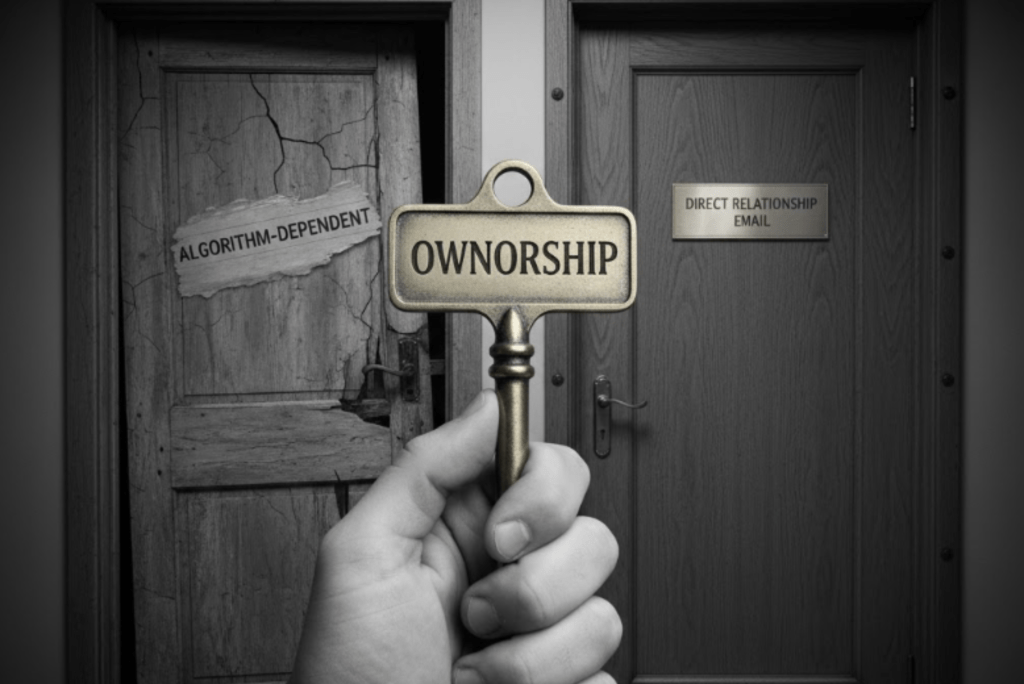
Email is the last channel you truly own.
PR shapes public perception more than any paid ad can.
Long-form content creates real differentiation.
Newsletters build habitual consumption.
Platforms change.
Algorithms shift.
Ads become more expensive.
AI dilutes content.
But permission, having a direct, trusted, ongoing relationship with your audience, never loses its value.
This is why we emphasize email systems, nurture flows, and content ecosystems inside every long-term client engagement.
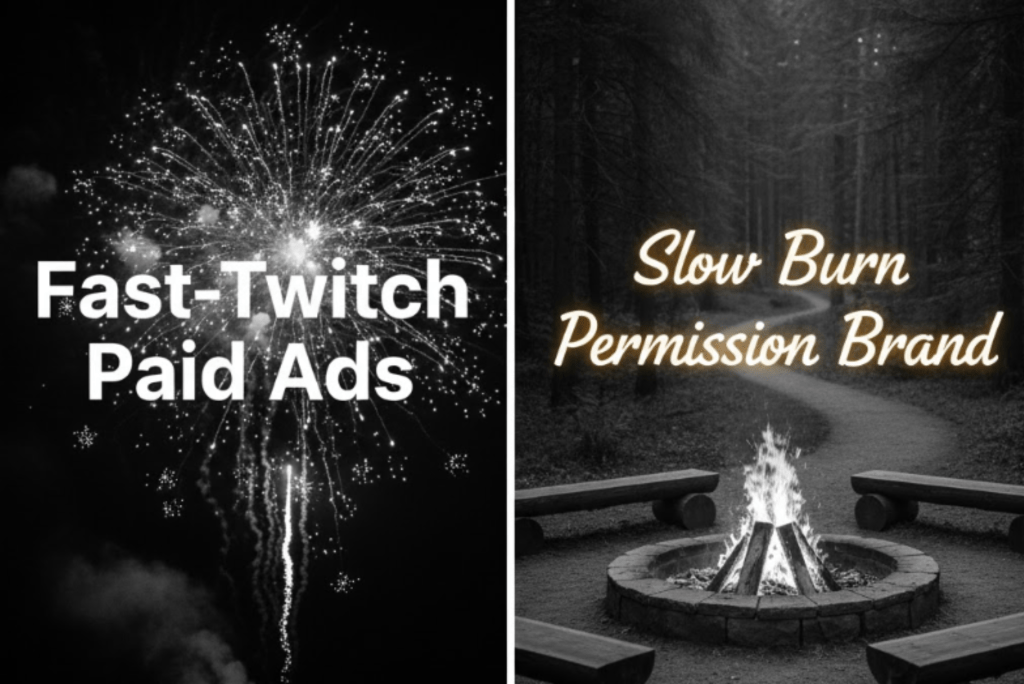
Fast-Twitch vs Slow Burn: A Direct Comparison
To clarify the distinction, here’s what differentiates fast-twitch paid strategies from slow-burn permission strategies.
Fast-Twitch Paid Ads
• traffic spikes
• cold audiences
• algorithm-driven visibility
• short attention spans
• low connection
• high skepticism
• fast burnout
• expensive over time
Slow Burn Permission-Based Marketing
• trust compounds
• warm audiences
• reputation-driven visibility
• deeper engagement
• higher conversion rates
• sustainable growth
• brand authority
• cost-effective long term
Paid ads can accelerate what already works, but they cannot create trust.
Permission-based ecosystems create trust so that paid ads actually work.
Your Brand Doesn’t Need More Traffic. It Needs More Trust.
If your funnel isn’t converting, if your ad spend is rising, or if your audience feels cold or quiet, the problem is rarely distribution. It is almost always trust, relevance, or emotional alignment.
This is why we wrote:
The New Marketing Hierarchy: Authority → Relevance → Distribution
Distribution is not the starting point.
It is the final step.
Authority comes first.
Relevance comes next.
Distribution is what you do once trust is established.
How to Build a Permission-Based Growth System in Your Business
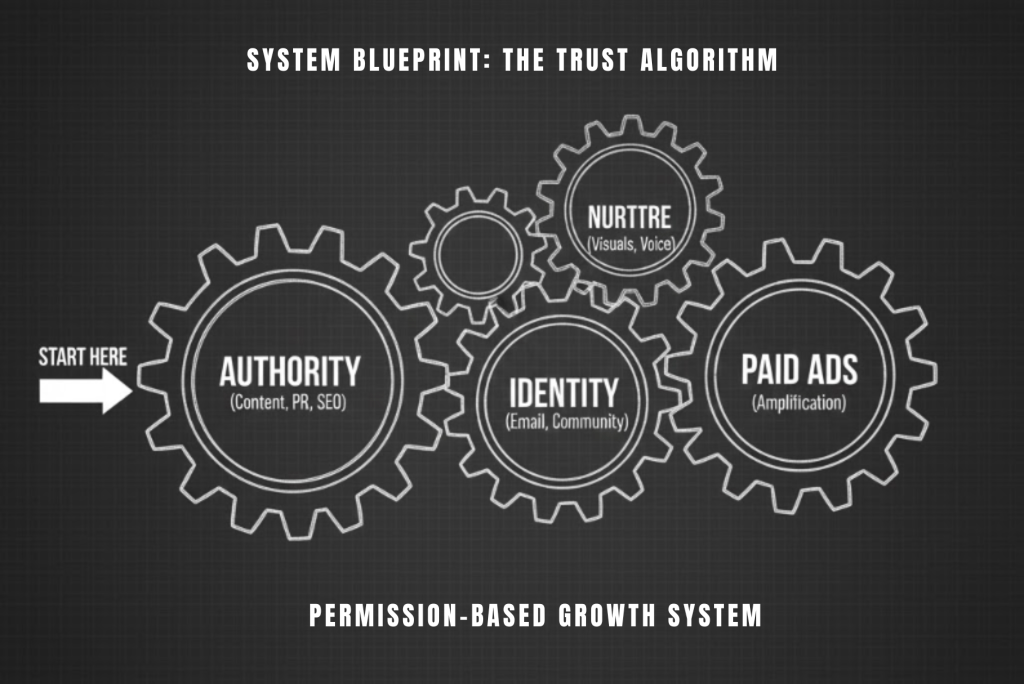
Here is the blueprint we implement with clients at Legacy Growth.
1. Strengthen brand identity
Your visuals, voice, and narrative must be cohesive across every surface.
2. Build your authority layer
Long-form content, blogs, interview-style videos, PR placements, expert insights.
3. Create your nurture ecosystem
Email sequences, weekly newsletters, audience segmentation.
4. Design an organic content rhythm
Consistency equals credibility.
Irregular posting equals instability.
5. Use paid ads for amplification, not initiation
Ads should amplify content that already resonates organically.
6. Integrate retargeting for warm audiences
People convert when you stay present in their awareness.
7. Focus on relationship velocity, not traffic volume
The depth of trust determines the speed of the sale.
This is the methodology behind our Strategy Session and Executive Plan, where we design your long-term roadmap: https://legacygrowth.life/strategy-session-and-executive-plan
Permission-Based Marketing Is Not Slower, It Is Smarter
Slow burn brands are not actually slow.
They simply invest upfront in trust so that everything else becomes faster.
Sales become easier.
Leads convert at higher rates.
Retention increases.
Revenue becomes more predictable.
In a world saturated with AI, noise, and endless competition, the brands that win are the ones their audience trusts the most.
If you want a marketing ecosystem that grows because of trust instead of in spite of it, we can help you build it.
Book a session here: https://legacygrowth.life/strategy-session-and-executive-plan



 Legacy Growth Blog
Leave a comment