
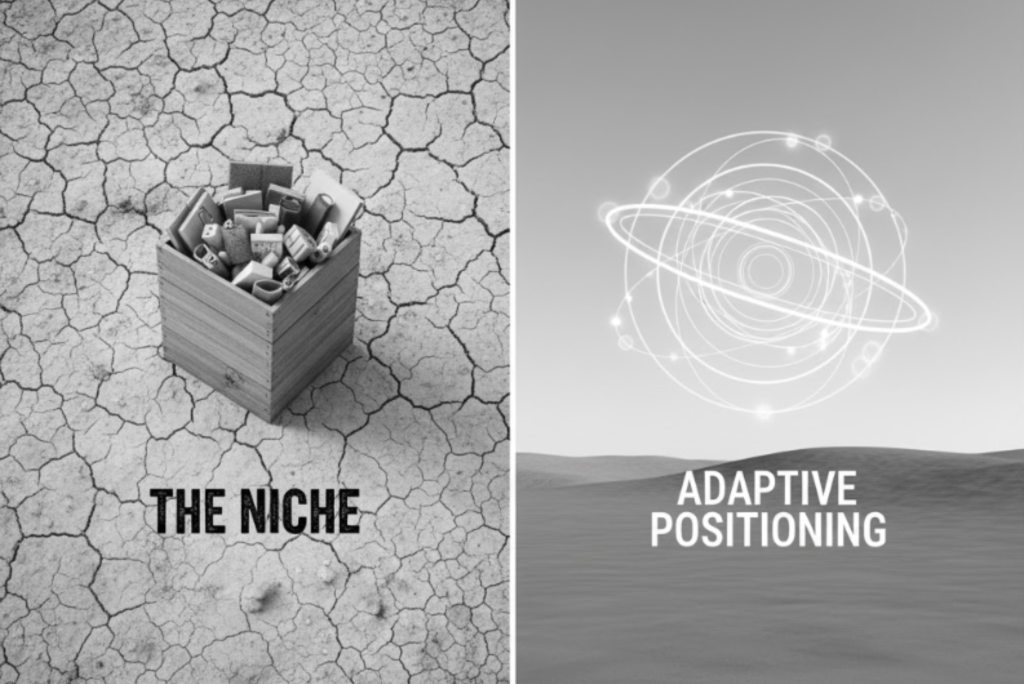

Why Modern Brands Must Be Adaptive, Not Boxed In
For years, entrepreneurs have been told the same thing: “You need to pick a niche. The smaller, the better.” The industry framed niching as a magic bullet: the single determining factor between clarity and chaos, traction and stagnation, growth and obscurity.
But that framework no longer matches the reality of how audiences behave in 2026.
Consumers evolve faster. Platforms change faster. Messaging norms shift faster.
And AI-generated content has leveled the playing field so aggressively that the old definition of niching is not only outdated, it can actively restrict growth.
Founders who cling to rigid niching don’t become more focused.
They become less adaptable.
At Legacy Growth, we’ve watched hundreds of businesses actually hurt themselves by clinging to a “perfect niche” instead of building a brand that can evolve with the people it serves.
This blog breaks down why the niche-first era is over, why too many entrepreneurs niche themselves into irrelevance, and what an adaptive, modern positioning strategy really looks like.
Why the Classic Niche Framework No Longer Works
Traditional niching relied on one assumption: audiences stayed the same. If you defined your customer avatar once, you could rely on that clarity for years.
That is no longer true.
Today’s audiences shift constantly because the environment around them shifts constantly.
Social platforms introduce new formats.
AI tools unlock new capabilities.
Economic conditions change buying priorities.
Trends reshape what people expect from brands.
Technology reshapes how people discover and trust businesses.
A static niche strategy assumes stability.
Modern marketing operates in volatility.
When founders define their niche too early (or too rigidly), they often create problems such as:
• messaging that no longer resonates
• offers built around a past version of their audience
• stagnation because the business cannot evolve
• losing market share to brands that adapt faster
• failure to recognize new demand signals
This is why we wrote about the deeper psychology of trust and relevance in:
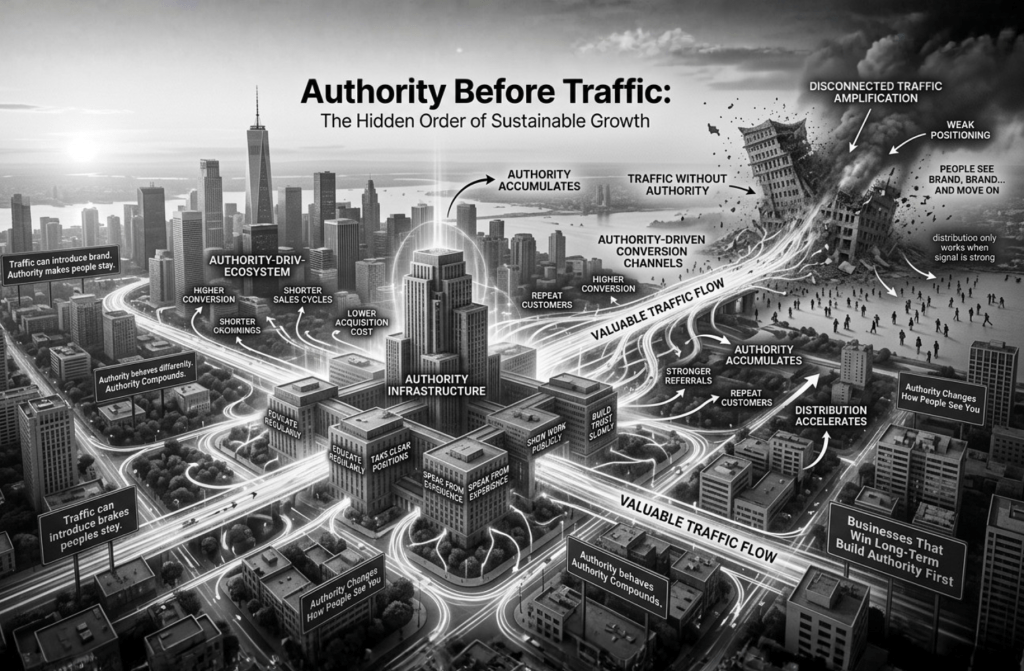
The New Marketing Hierarchy: Authority → Relevance → Distribution
Authority and relevance both require evolution.
A “perfect niche” cannot give you that.
Entrepreneurs Are Not Meant to Shrink Themselves
One of the worst pieces of advice given to entrepreneurs is that they must “choose one thing forever.”
But founders evolve.
Audiences evolve.
Markets evolve.
Business models evolve.
Problems evolve.
Buyers evolve.
Your brand must evolve too.
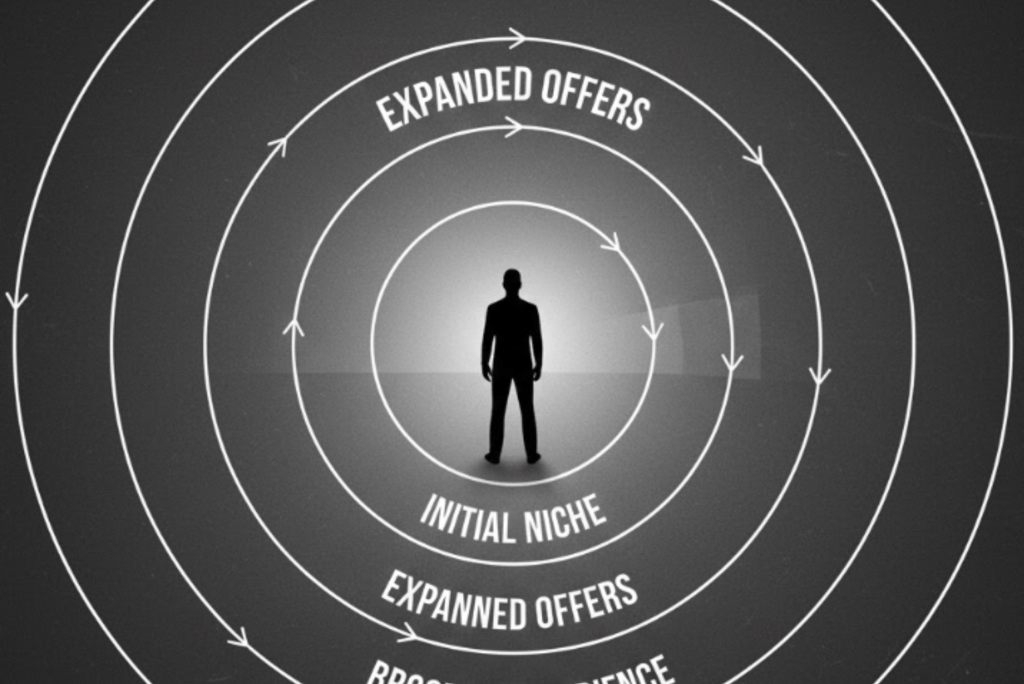
Many of the clients we work with at Legacy Growth come to us because they have outgrown their initial niche. They want to expand their offers, broaden their audience, or reposition themselves, but they feel trapped by the niche advice they adopted early on.
This is not a sign that something is wrong.
It is a sign that something is working.
You are supposed to expand.
Your brand is supposed to adapt.
Your offer ecosystem is supposed to grow.
The problem is not outgrowing your niche.
The problem is not knowing how to evolve without losing clarity.
Why a Niche Is Not an Identity
A niche is just a starting point for discovery.
It is not your brand, your purpose, or your long-term direction.
When a niche becomes an identity, founders experience:
• creative stagnation
• restrictive messaging
• misaligned offers
• frustration with content
• uncertainty about expansion
• confusion about who they “should” serve
This is why content feels forced for so many entrepreneurs. They aren’t creating for their audience, they’re creating a niche trap.
Your niche is not supposed to define you.
It is supposed to inform your strategy.
The identity of your brand should come from your mission, your values, your unique perspective, and the impact you want to have. Niching should refine your communication, not shrink your potential.
This is deeply connected to what we covered in:
Why Brand Identity Is the Foundation of Every Successful Business
Brand identity is expansive. Niching is reductive.
You need both, but in the right order.
The Rise of Adaptive Positioning

Instead of rigid niching, modern brands need adaptive positioning: a strategy that evolves with the real behaviors, needs, and psychology of their audience.
Adaptive positioning is built around:
1. Core worldview
What you believe and why it matters.
2. Expanding problems
The challenges your audience faces as they grow.
3. Multi-layered client avatars
Primary, secondary, and future customer segments.
4. Elastic messaging
Communicating across different levels of awareness.
5. Offer evolution
Developing products and services that grow with your audience.
6. System-based content creation
Content that adapts to trends without losing identity.
7. Continuous market feedback
Real-world data guiding your direction, not assumptions.
This creates clarity without rigidity.
Direction without limitation.
Focus without restriction.
It is also how we built the frameworks behind our Strategy Session & Executive Plan.
This process integrates adaptive positioning into your overarching business blueprint.
Your Audience Will Evolve. Your Business Should Too.
The most successful brands right now are not the ones with the smallest niche. They are the ones with the clearest value proposition and the strongest adaptability.
They don’t cage themselves in a demographic box.
They connect deeply with a worldview, a mission, and a problem set that expands over time.
These brands thrive because:
• they evolve with their followers
• they innovate around changing needs
• they adjust offers quickly
• they refine messaging without losing identity
• they stay relevant in fast-moving markets
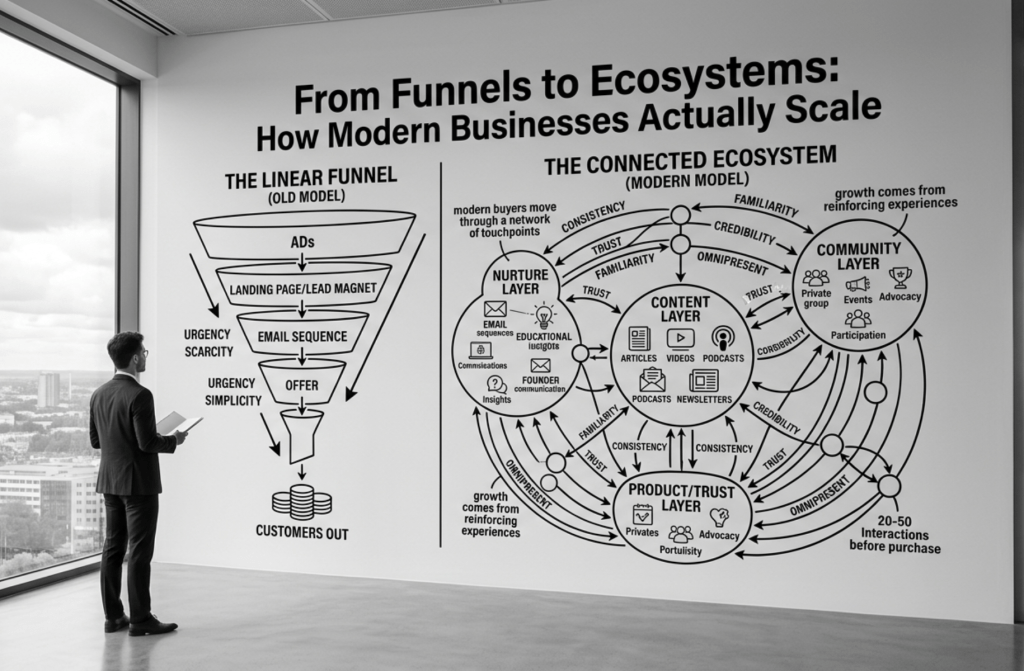
Rigid niches produce fragile businesses.
Adaptive positioning produces sustainable growth.
How to Build a Business That Evolves With Your Audience

Here is the process we use with clients when they’re ready to outgrow their niche.
- Step One: Reevaluate your mission
Clarify the real reason your business exists and who it impacts. - Step Two: Identify audience expansion points
Look at where your clients go after they solve their initial problem.
- Step Three: Audit your offer ecosystem
Determine whether your products or services match where your audience is headed. - Step Four: Rebuild messaging architecture
Align your narrative with both current and future client segments. - Step Five: Strengthen authority signals
Establish credibility across multiple audience layers. - Step Six: Implement an adaptive content strategy
Create content that allows your brand to evolve in public. - Step Seven: Test before you commit
Experiment with new angles, not new identities.
This is not just theory.
This is how modern brands scale sustainably.
You Don’t Need a Smaller Niche. You Need a Smarter Strategy.
Entrepreneurs struggle not because they pick the wrong niche, but because they think niching is the entire strategy.
Niching is a starting point, not the strategy.
Your mission, your audience, your market, your content, and your ecosystem all evolve.
Your niche should evolve too.
If you want help expanding your brand without losing clarity, our Strategy Session & Executive Plan is the fastest way to get an expert audit and a roadmap tailored to your growth trajectory.

Book your session here: https://legacygrowth.life/strategy-session-and-executive-plan


 Legacy Growth Blog
Leave a comment