
How Emotional Resonance, Trust, and Context Determine Whether Your Funnel Converts in 2025
Every founder who has ever struggled with a funnel usually blames the same thing: “My conversion rate is too low.” They blame the ad traffic. They blame the landing page copy. They blame the offer structure. They even blame the algorithm.
But at Legacy Growth, when we audit struggling funnels, we almost always find a different root cause.
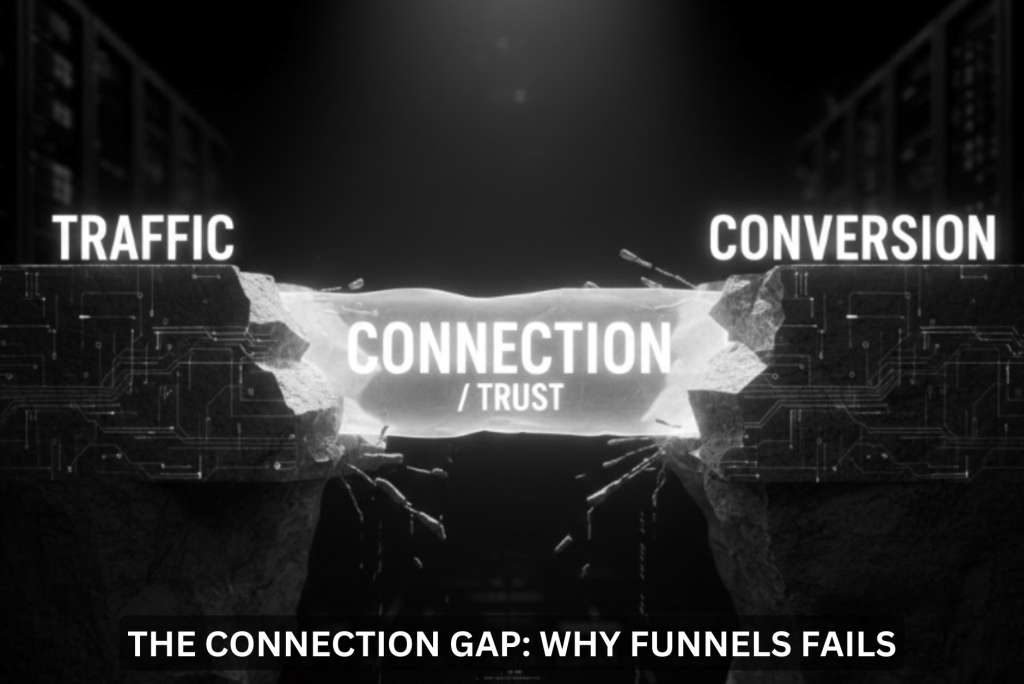
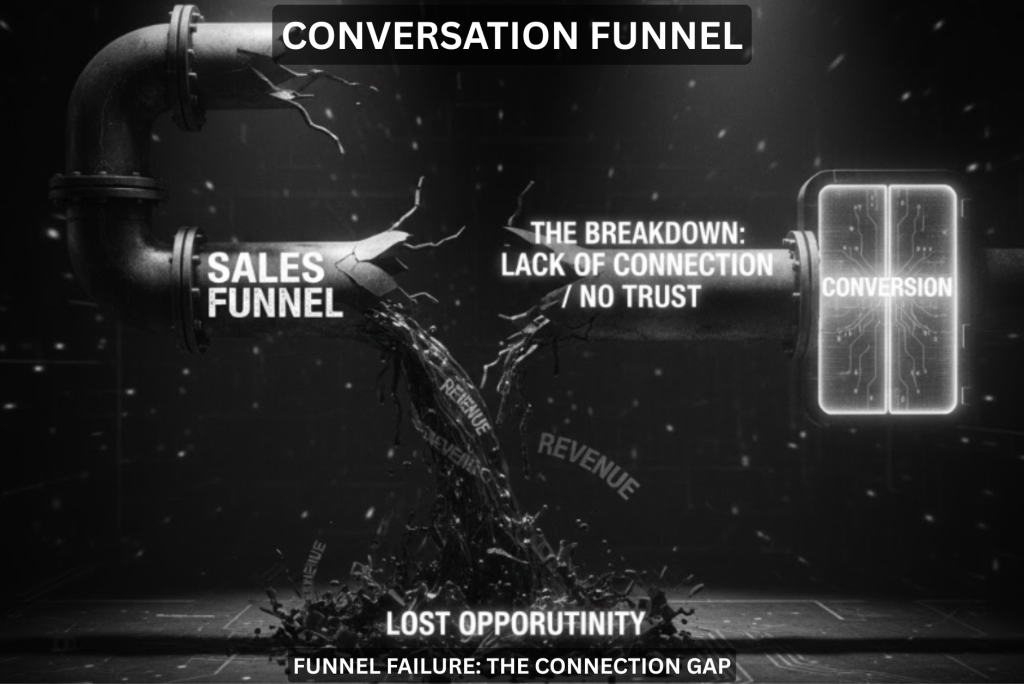
Funnels don’t fail at conversion.
They fail long before that.
They fail at connection.
In 2026, consumers move through buying decisions differently than they did even three years ago. With AI-generated content flooding every platform, with thousands of identical funnels circulating online, and with buyers doing deeper research than ever, conversions no longer hinge on tactics. They hinge on emotional alignment.
If a consumer does not feel understood, seen, guided, and safe, they will not convert.
And no amount of design tweaks or A/B tests can fix that.
This blog breaks down why so many funnels collapse at the human level, not the technical level, and how to rebuild yours to create trust before you ever drive traffic.
Consumer Psychology Has Changed, but Most Funnels Haven’t
Most funnel frameworks were developed during the Facebook Ads boom, when attention was cheap and trust was implied. The market was less saturated, consumers were less discerning, and brand identity mattered less because the very presence of a funnel implied credibility.
Today, the landscape is different.
People read fewer full pages.
They skim more.
They compare more.
They verify more.
They trust less.
Consumers now rely on trust signals that sit outside the funnel itself. Social content, reviews, perceived authority, brand identity, website quality, and narrative coherence all shape the emotional state a buyer is in by the time they ever reach your landing page.
This is why we wrote:
Social Media vs. Websites: Which Matters More for Business Growth in 2025
Funnels fail because founders assume the funnel itself is responsible for persuasion.
In reality, persuasion happens before the click.
Funnels Fail When They Don’t Create Emotional Safety
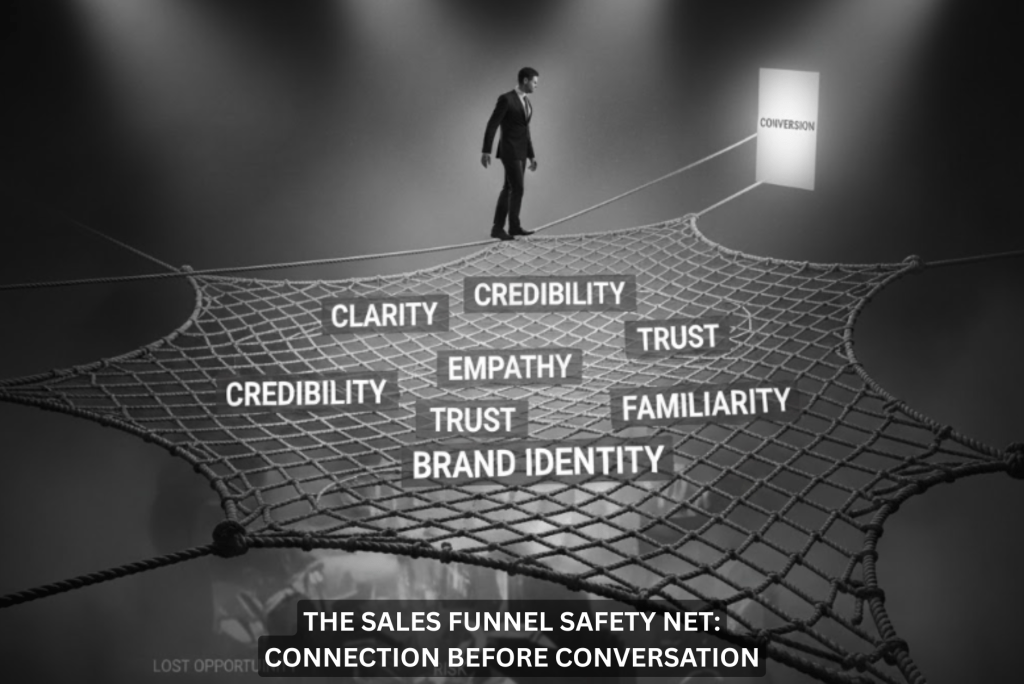
Conversion is not a logical act. It is an emotional one. Even in B2B. Even with sophisticated buyers. Even with high-ticket offers.
If your funnel does not capture the psychological safety the buyer needs, it collapses.
Emotional safety in a funnel is created by
• clarity before cleverness
• familiarity before novelty
• credibility before urgency
• empathy before authority
• orientation before information
If the buyer feels confused or overwhelmed, they freeze.
If the buyer feels sold to instead of understood, they leave.
If the buyer feels pressured before they feel trust, they back out.
This is why we emphasize brand identity as the first building block in your ecosystem. When buyers recognize the tone, visuals, and message they have already seen in your organic content, the funnel feels like a continuation of a relationship rather than an isolated sales attempt.
Read:
Why Brand Identity Is the Foundation of Every Successful Business
Funnel conversion is the outcome of emotional continuity.
Most Funnels Don’t Match the Buyer’s Stage of Awareness
Another common failure: misalignment between the funnel message and the buyer’s actual readiness.
Founders often build funnels for buyers who are “solution-aware,” when most of their traffic is actually “problem-aware” or even “unaware.” That mismatch creates friction.
If your funnel assumes too much sophistication, people feel lost.
If your funnel assumes too little, people feel annoyed.
If your funnel assumes urgency but they feel uncertain, they step away.
The psychology of funnel alignment requires understanding
• what the buyer knows
• what they fear
• what they prioritize
• what objections they carry
• what timeline they’re on
This is why we wrote:
Content Without Context: Why Most Entrepreneurs Waste Time Posting Online
Funnels convert when the buyer feels understood at their stage of decision-making.
The Biggest Reason Funnels Fail: No Pre-Funnel Trust
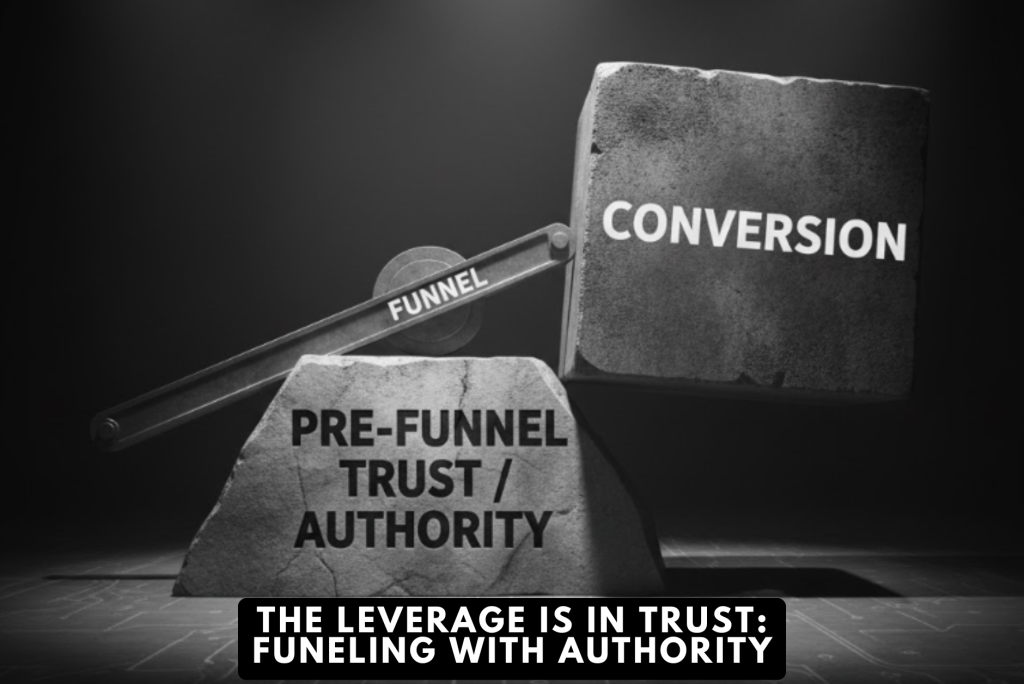
A funnel is not designed to create trust. It is designed to leverage trust.
If your social content, website, brand identity, email presence, and authority signals are weak, the funnel inherits that weakness.
People do not convert inside the funnel.
They convert because of everything outside the funnel.
Trust is built through
• consistent organic content
• narrative alignment
• social proof
• brand identity cohesion
• authority-focused posting
• real-world resonance
• time spent with your ecosystem
Research shows that buying decisions today increasingly rely on total interaction time, not total touchpoints. This aligns with findings we discussed in:
Why Billboards No Longer Belong in the Modern Growth Playbook
It is not about “touching” the consumer. It is about holding their attention long enough, across enough surfaces, that trust becomes the natural next step.
When your brand has no depth, your funnel never gets the chance to work.
The Four Psychological Layers Every Funnel Must Build
Instead of thinking about “pages,” modern funnel design should address psychological states. When we rebuild funnels for clients, we use a four-stage sequence.
1. Orientation
Do I know where I am?
Do I understand what this is about?
Is the language familiar or foreign?
2. Identification
Does this brand understand my problem?
Does this apply to me?
Do I feel seen?
3. Validation
Can this person or company actually solve this?
Do they have real proof?
Do I trust their authority?
4. Decision Confidence
Am I emotionally safe moving forward?
Is the value higher than the cost?
Do I feel guided rather than pressured?
Most funnels jump straight to stage 4, which is why they fail.
Good funnels guide the buyer through the psychology, not just the pages.
How to Rebuild a Funnel That Converts by Creating Connection

Here is the recalibration process we use with clients at Legacy Growth.
- Step One: Rebuild the Emotional Narrative
We rewrite the funnel to match avatar fears, desires, priorities, and language. - Step Two: Cross-Link Ecosystem Authority
We integrate content, testimonials, social proof, and brand identity to create coherence. - Step Three: Re-establish Offer Clarity
If the offer is not instantly understandable, the funnel cannot recover. - Step Four: Strengthen the Pre-Funnel Presence
We ensure the organic ecosystem is strong enough to warm traffic before they ever click. - Step Five: Run Distribution Last
Only once the psychological architecture is complete do we begin paid ads or retargeting.
This is also why we wrote:
Why Your Paid Ads Launch Failed Before It Ever Began
Traffic should be the last step, not the first.
Connection First, Conversion Second
Funnels work when they feel like a natural next step in a relationship, not a departure from it. When brands try to scale before building trust, the funnel collapses. When founders chase conversion before connection, the numbers reflect it.
The future of funnels is not more pages.
It is more emotional intelligence.
When you build trust before traffic, your funnel does not feel like a funnel.
It feels like clarity, safety, and inevitability.
If You Want Better Funnel Conversions, Start With Better Connection
If your funnel conversions have plateaued, the answer is almost never “more traffic.” The answer is rebuilding the psychology, the narrative, the authority signals, and the emotional clarity behind every step.
This is what we specialize in at Legacy Growth.
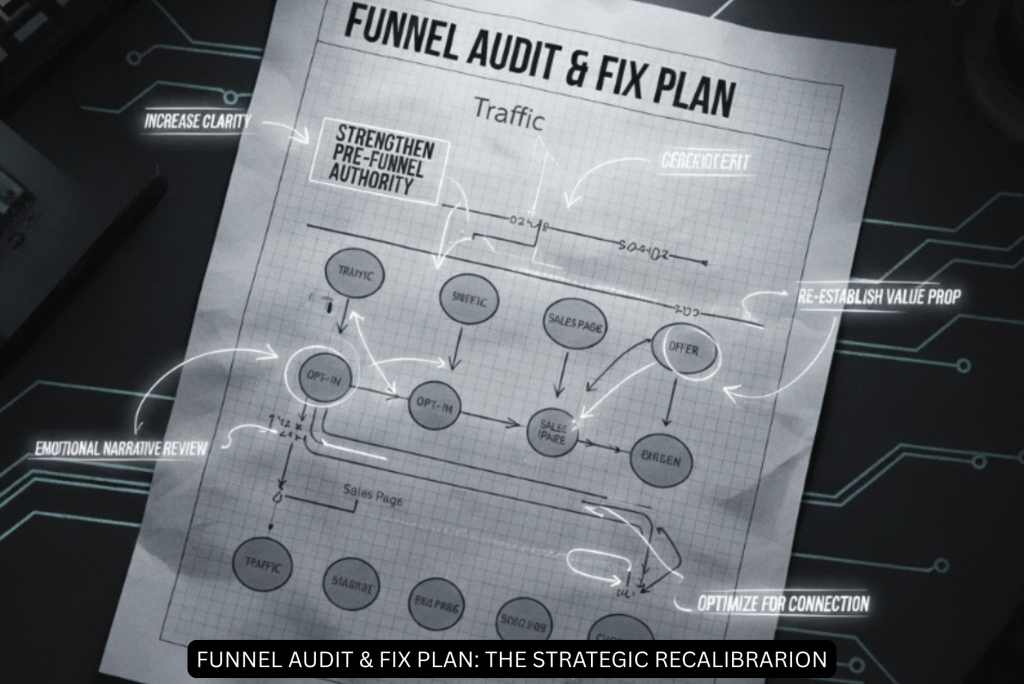
If you want a full breakdown of why your funnel is underperforming and a precise plan to fix it, our Strategy Session and Executive Plan is the fastest path.Book a session:
https://legacygrowth.life/strategy-session-and-executive-plan



 Legacy Growth Blog
Leave a comment