Every week someone somewhere goes viral.
A post explodes on LinkedIn.
A thread spreads across X.
A short video racks up millions of views overnight.
From the outside, it looks like the fastest path to growth.
Attention. Reach. Momentum.
But if you zoom out and look at the brands that are quietly becoming industry authorities, something surprising appears.
Most of them are not built on viral posts.
They are built on content that compounds.
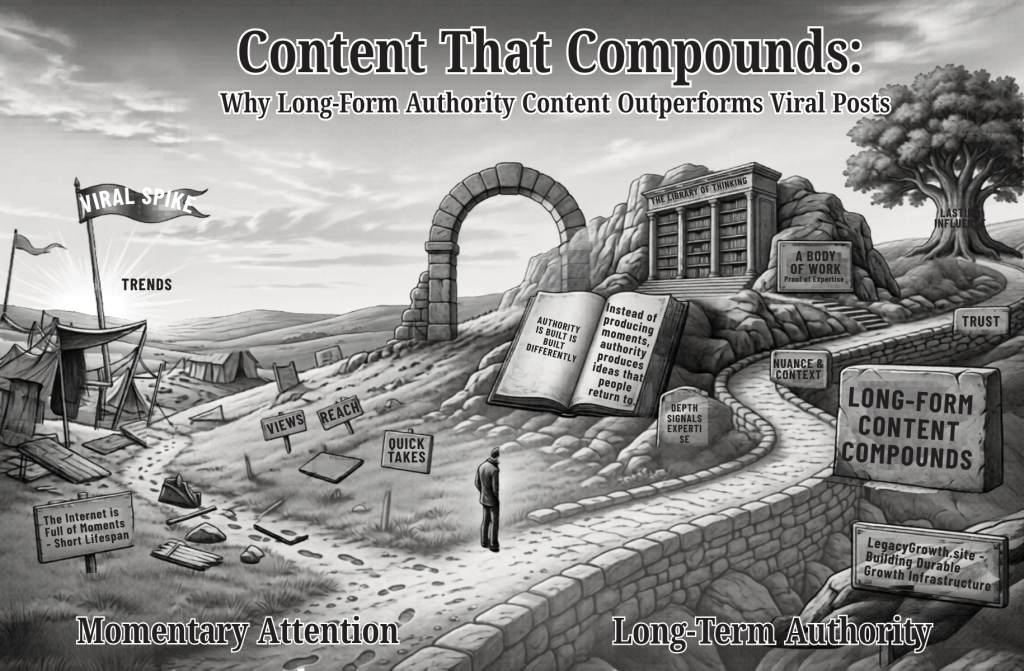
And the difference between those two things is what separates momentary attention from long-term authority.
The Internet Is Full of Moments
Viral content is designed for the moment.
It rides a trend.
It sparks curiosity.
It moves quickly through the algorithm.
For a brief period, a lot of people see it.
Then just as quickly, the internet moves on.
A new trend appears.
A new conversation begins.
Another post takes its place.
The content that once seemed everywhere disappears into the endless scroll.
This isn’t a failure of the creator.
It’s simply how modern platforms are designed.
They reward recency and velocity, not longevity.
Which means the majority of viral content has a very short lifespan.
It captures attention, but it rarely builds reputation.
Authority Is Built Differently

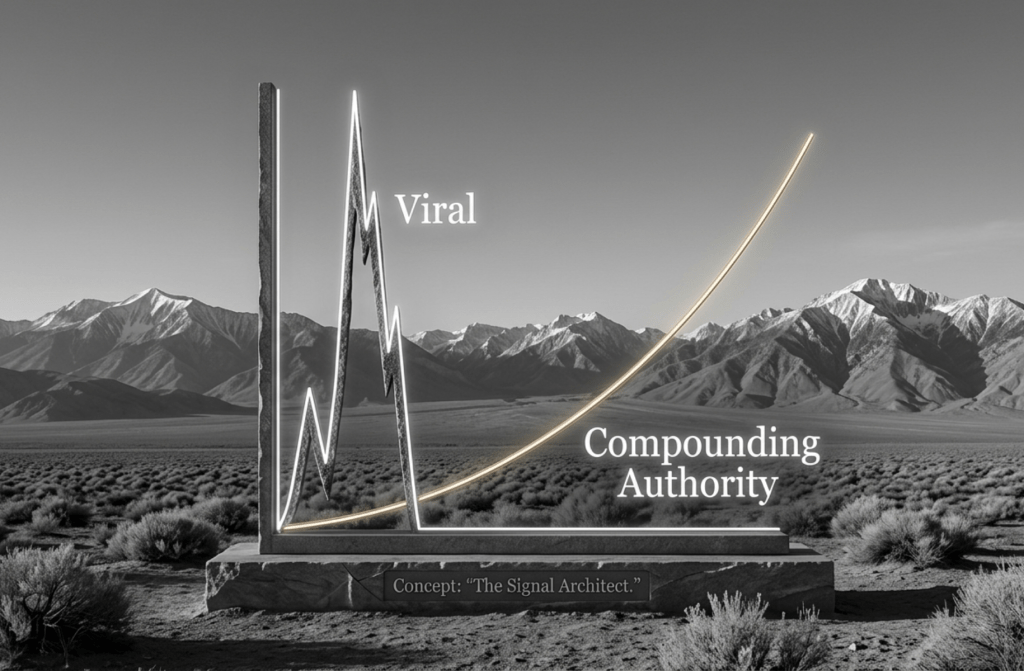
Authority doesn’t behave like a viral spike.
It behaves more like an archive.
Instead of producing moments, authority produces ideas that people return to.
Articles that people bookmark.
Essays that people reference months later.
Insights that people share in conversations long after they were first written.
When someone encounters thoughtful long-form content, something different happens.
They slow down.
They read more carefully.
They begin to understand how the author thinks.
And that is where authority begins.
Because authority is not just about what you say.
It’s about how you think about problems.
Depth Signals Expertise
One of the most powerful signals of expertise is depth.
Not surface-level commentary.
Not quick opinions.
But a willingness to explore ideas thoroughly.
Long-form content allows space for that depth.
It allows a founder, strategist, or expert to explain not just what works, but why it works.
It allows nuance.
It allows context.
It allows the reader to see the framework behind the insight.
And when someone encounters that level of thinking consistently, their perception of the brand changes.
It stops feeling like marketing.
It begins to feel like guidance.
Why Long-Form Content Compounds

Short posts often disappear because they depend on the moment they were published.
Long-form authority content behaves differently.
A thoughtful article written today may still be relevant six months from now.
A strategic insight may still be valuable two years later.
Because the content isn’t tied to a trend.
It’s tied to an idea.
Over time, those ideas accumulate.
One article becomes five.
Five become twenty.
Twenty become a body of work.
At that point, something powerful happens.
When people discover the brand, they don’t just see a single piece of content.
They see an entire library of thinking.
That library becomes proof of expertise.
And proof builds trust.
Viral Attention vs Trusted Perspective
There is nothing inherently wrong with viral content.
It can introduce new audiences to a brand.
It can spark conversations.
It can create short bursts of visibility.
But viral attention is rarely enough on its own.
Because when someone becomes genuinely interested in a brand, they begin to look deeper.
They search for longer explanations.
They want to understand the philosophy behind the work.
If all they find are short posts and quick takes, the signal remains weak.
But when they encounter thoughtful essays, deep insights, and educational content, the signal becomes clear.
This is someone who understands their field.
And that clarity changes how the audience perceives the brand.
The Library Effect
One of the most underrated advantages of long-form content is what could be called the library effect.
Instead of relying on constant bursts of attention, the brand slowly builds a collection of ideas.
Over time, that collection becomes an intellectual home.
People can explore it.
Learn from it.
Return to it when they face new problems.
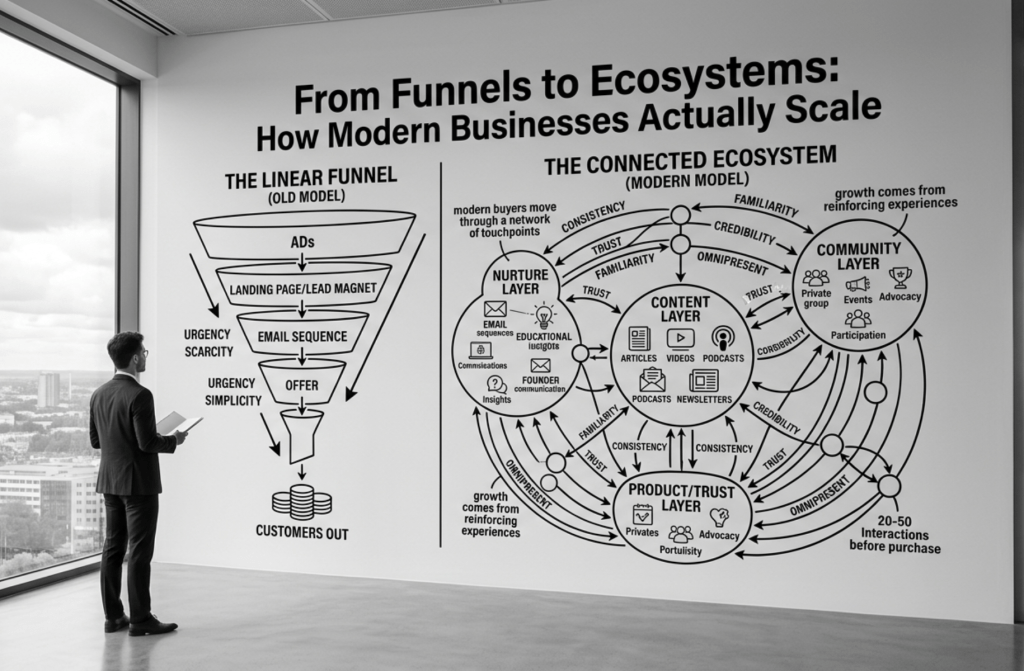
The content stops behaving like marketing.
It begins behaving like infrastructure.
An asset that continues to work long after it was first created.
The Shift Smart Brands Are Making

The brands that understand this dynamic approach content differently.
They don’t chase every trend.
They don’t panic when a post doesn’t explode immediately.
Instead, they focus on creating work that will still be valuable tomorrow.
Thoughtful essays.
Educational frameworks.
Clear explanations of complex ideas.
Over time, this approach produces something far more powerful than a viral spike.
It produces recognition.
People begin associating the brand with a particular kind of thinking.
And when that association becomes strong enough, the brand’s ideas begin to travel on their own.
Final Thought
The internet rewards speed.
But trust rewards depth.
Viral posts may introduce your brand to thousands of people for a moment.
Authority content does something more durable.
It gives people a reason to return.
It shows them how you think.
And over time, those ideas accumulate into something that no algorithm can take away.
A body of work.
Because the brands that build lasting influence rarely chase attention.
They build content that compounds.
Book Your Discovery Call
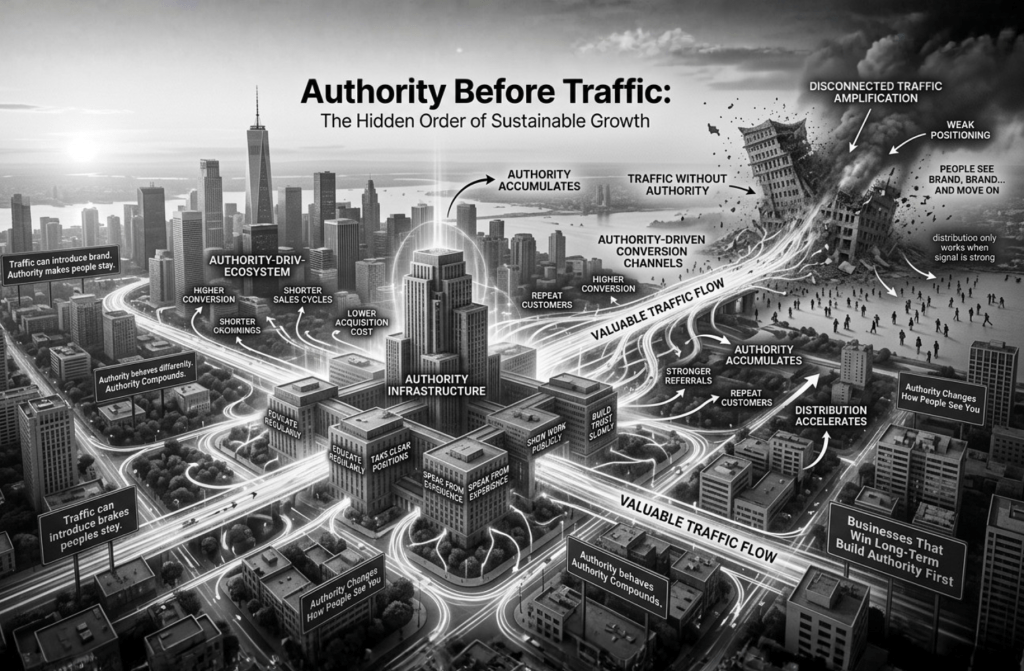
Most businesses do not struggle because they lack marketing tools.
They struggle because their growth systems were never designed to build trust and authority at scale.
At Legacy Growth, we don’t sell hacks. We build durable growth infrastructure.
If you want your time back, your energy back, and your growth back, let’s talk.
➡️ Book a strategy call with LegacyGrowth.life
We’ll audit your current work structure, show you exactly what to delegate, and help you build a VA system that compounds.
No gimmicks. Just execution that actually works.

 Legacy Growth Blog
Leave a comment