

In the world of digital business, attention is currency.
In the world of digital business, attention is currency.
But attracting attention alone isn’t enough—what you really want is alignment.
You want people to find your brand and feel like they’ve just walked into the room they didn’t know they were looking for.
That’s magnetic marketing.

It’s not about being everywhere.
It’s about being irresistible to the right people, in the right place, with the right message.
Here’s how you create a magnetic marketing strategy that not only turns heads—but builds trust, drives conversions, and fuels long-term growth.
1. It All Starts With Psychology (Not Just Platforms)
“People don’t buy products—they buy better versions of themselves.”
— Donald Miller, StoryBrand
Most marketing doesn’t fail because of bad design, weak copy, or poor tech stacks.
It fails because it skips the deep emotional work—the part that connects with human behavior at the core.
You can have the most beautiful website, the cleanest funnel, and the best content strategy…
but if your message doesn’t resonate on a human level, it won’t convert.
The Truth: Marketing is Emotional, Not Logical

Neuromarketing research shows that emotions drive decisions, while logic only justifies them afterward.
In a landmark study by Antonio Damasio, a neuroscientist and professor at USC, he found that people with damage to the emotional parts of their brain couldn’t make decisions, even though their logic was intact.
This tells us one thing:
Your marketing must feel like the answer before it proves it.
Enter: Magnetic Marketing
Magnetic marketing isn’t about chasing leads—it’s about creating a gravitational pull.
And that starts with understanding how your ideal customer thinks, feels, and experiences their problem on a daily basis.
This is why psychology isn’t a “nice to have” in your brand—it’s the foundation.
Before you ever write a sales page, create a funnel, or post on social media, ask yourself:
- What do they really want (beneath the surface)?
Example: They say they want “more time”—but what they’re craving is freedom without guilt. - What are they afraid of that they’re not saying out loud?
Fear of failure, of being seen, of wasting time or money… - What internal beliefs are sabotaging their ability to move forward?
“I’m not ready.” “I’m not good at tech.” “I’ve tried before and failed.” - What stories do they need to hear to believe transformation is possible for them?

When you know these answers, you stop marketing to pain points and start marketing to identity shifts.
Build a Stellar Customer Avatar (That Actually Converts)
Most “ideal client” exercises only scratch the surface.
Demographics might tell you who your audience is,
but psychographics tell you why they buy.
“The best marketing doesn’t feel like marketing. It feels like someone finally gets you.”
— Bernadette Jiwa
Go deeper than the basics. Ask yourself:
- What are they Googling at 2am when no one is watching?
“How do I start over at 35?” “How to make money without being on social media.” - What are they secretly frustrated by—but haven’t voiced?
“Why does everyone else make this look easy?” “I feel behind.” - What do they wish existed in your industry that they haven’t found yet?
This is your innovation edge. Their unmet desires = your marketing opportunity. - How would they describe their dream outcome—not in your words, but in theirs?
Use their language, not your professional jargon.
“I just want to wake up and not dread Mondays.”
When you define your avatar through this lens, everything gets easier:
✅ Your messaging becomes clear and targeted.
✅ Your content speaks directly to their unspoken needs.
✅ Your offers feel like a natural next step—not a hard sell.
Psychological Triggers That Enhance Magnetic Marketing
Use these cognitive principles to your advantage:
- Mirror Neurons: When people see themselves in your content, their brain fires as if they’re living that experience. Use story, identity-based copy, and visual language to trigger connection.
- The Baader-Meinhof Effect: Once someone is aware of a problem or desire, they start to “see” it everywhere. Be the brand that shows up right when they’ve become problem-aware.
- Cognitive Dissonance: Challenge their current belief system with subtle, respectful friction.
“You’ve been doing it this way for years… but what if that’s what’s keeping you stuck?”
Real Magnetism Is Emotional Precision
The better you understand the emotional landscape of your audience, the more powerful your marketing becomes.
Don’t just guess what they need.
Know what they believe, what they fear, what they desire—and meet them there with empathy, clarity, and confidence.
Magnetic marketing isn’t louder. It’s sharper. Cleaner. Aligned.
It reflects who your audience wants to become—
and positions your brand as the bridge to help them get there.
2. Your Backend Should Be Built for Growth, Not Stress

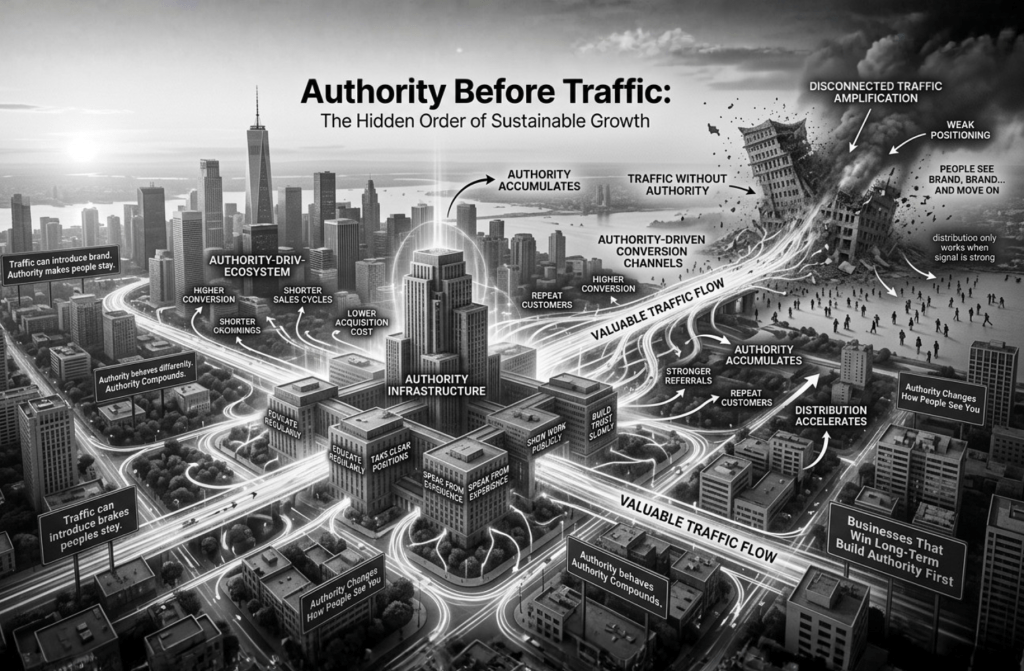
Once you’ve dialed in your message and audience, it’s time to build the infrastructure that supports your visibility and conversion.
This is where most entrepreneurs fall short—they get the front end right but neglect the systems that sustain and scale the business.
Use WordPress for Your Website & Blog:
WordPress is still the gold standard for owning your content.
It’s SEO-friendly, endlessly customizable, and gives you total control of your site and blog.
Your blog isn’t just for storytelling—it’s your organic magnet.
Every blog post becomes a long-form touchpoint that builds trust, positions your authority, and brings in leads that are already warmed up.
Blog like you’re having a one-on-one conversation with your ideal client.
Answer their questions. Dispel their fears.
Show them what’s possible.
Use GoHighLevel (GHL) for Your CRM + Automation:
This is where the backend magic happens.
GHL lets you:
- Capture leads directly from your website
- Nurture them with strategic email and SMS flows
- Set up pipelines and workflows that run without you
- Track every interaction in one place
Your CRM shouldn’t just hold names—it should guide the customer journey.
From opt-in to onboarding, it should feel intentional and seamless.
This allows you to market with precision, not pressure.
3. Brand Consistency Creates Brand Magnetism

“A brand is a promise. A great brand is a promise kept.”
— Scott Bedbury, former Nike and Starbucks brand strategist
People trust what they recognize.
They buy from what feels familiar.
Not because it’s always the best option—but because it’s the one they’ve come to rely on.
In psychology, this is called the mere exposure effect—the more we’re exposed to something, the more we tend to prefer it. That applies to music, faces, fonts, and yes—brands.
If your brand shows up with a different tone on social media than it does in your emails, or your landing page copy feels completely disconnected from your blog… your audience will feel that disconnect—even if they can’t name it.
That small inconsistency creates internal resistance.
And resistance kills conversions.
Brand consistency isn’t about aesthetics alone—it’s about trust through alignment.
It tells your audience:
This is who we are.
This is what we stand for.
You’re in the right place.
What Does Brand Consistency Actually Mean?
It means when someone interacts with your brand—no matter the platform, no matter the format—they experience the same tone, values, and energy.
A few key pillars of brand consistency:
- Voice and Tone: Are you direct and bold? Warm and empathetic? Insightful and analytical? Your tone of voice is your digital handshake. It should be recognizable whether you’re writing a tweet, an email, or a sales page.
- Visual Identity: This goes beyond logos and color palettes. Is your design system cohesive? Are your visuals telling the same story as your copy? If someone saw your brand content with the logo blurred out, would they still know it’s you?
- Messaging: What are the core themes, beliefs, and narratives that show up again and again in your content? These form the foundation of your brand story—the big idea you’re here to communicate to the world.
Why It Matters: The Psychology of Consistency
In Robert Cialdini’s groundbreaking work Influence: The Psychology of Persuasion, he names consistency as one of the six key principles of persuasion.
People naturally want to align themselves with brands that are steady, clear, and confident. Inconsistent brands create uncertainty—and uncertainty never converts.
Think about the most magnetic brands you follow. You know what to expect. You know how they make you feel. And because of that, you keep coming back.
Strategic Consistency = Magnetic Trust
Let’s break it down practically:
- If your IG Reels are raw and empowering, but your funnel copy feels overly corporate, people will bounce.
- If your blog is deeply educational, but your emails are full of fluff, you’ll lose authority.
- If your brand feels like five different voices in five different places, people won’t trust you enough to buy.
You don’t have to be perfect.
You just have to be consistent.
That’s what builds credibility—and credibility is the currency of conversion.
Ask Yourself:
- Can someone understand who my brand is within 10 seconds of landing on my site?
- Do my visuals, copy, and offers all feel like they belong to the same company?
- Is my message clear, repeated, and aligned across every customer touchpoint?
If the answer is no, you don’t need a full rebrand—you need realignment.
Magnetic marketing isn’t about doing more—it’s about showing up in a way that builds compounding trust over time.
The Takeaway:
People don’t need louder brands.
They need clearer ones.
They don’t need perfect—they need predictable.
When your brand consistently speaks to who they are and what they need, they begin to associate your brand with safety.
And safety is what opens the door to sales.
Brand consistency isn’t a polish—it’s a psychological trigger.
One that says:
You can trust us.
We’re still who we said we are.
We’re still here for you.
That’s magnetic.
4. Position Your Brand as the Guide, Not the Hero

“In every story, the hero is looking for a guide.”
— Donald Miller, Building a StoryBrand
One of the most powerful mindset shifts in marketing is this:
Your brand is not the hero. Your customer is.
When entrepreneurs and companies build their brand around themselves, their features, and their accolades, they unintentionally alienate the very people they’re trying to reach.
Magnetic brands don’t show off—they show up.
They don’t try to impress—they aim to empower.
They aren’t saying, “Look how great we are.”
They’re saying, “Here’s how we can help you win.”
The Psychology Behind the Story
This approach is rooted in narrative psychology and is powerfully articulated in Donald Miller’s StoryBrand framework. Humans are wired to understand the world through stories—we process information emotionally first, then logically.
And in every story, there’s a clear structure:
- A hero has a problem.
- They meet a guide.
- The guide offers a plan.
- The plan helps them avoid failure and reach success.
Now apply this to marketing:
- Your customer is the hero.
- Your brand is the guide.
- Your product or service is the tool—not the destination.
When you try to position your brand as the hero, you create competition between your brand and your customer’s identity. Subconsciously, it tells them: “This isn’t about you—it’s about us.” And people tune out.
But when you show up as the guide—the wise, clear, experienced voice that understands where they are and knows how to get them where they want to go—you create instant resonance.
You become the brand they trust to help them transform.
Shift from Self-Promotion to Customer Empowerment
Here’s how to know if your brand is making the shift:
- Old way:
“We’re the best.”
“Our product is award-winning.”
“We’ve been featured in XYZ.” - Magnetic way:
“Here’s how you can finally solve that problem.”
“We understand what you’re struggling with.”
“This is how we make it easier for you to succeed.”
People don’t want a hero—they want help.
They want clarity, confidence, and a way forward.
The moment your marketing stops being about you
and starts being about them—you unlock a different kind of magnetism.
Build Trust Through Relatability and Results
Trust isn’t built through boasting.
It’s built through understanding, relevance, and results.
Position your brand as the trusted guide who:
- Understands their pain
- Speaks their language
- Offers a roadmap (not just a product)
- Reminds them they are capable of more
- Walks beside them—not above them
This doesn’t make your brand smaller—it makes it essential.
How to Put This Into Practice
Here are a few ways to shift your brand’s positioning today:
- Rewrite your “About” page with your customer as the focal point—not your resume.
- Frame testimonials as customer victories, not brand wins.
- Craft emails that say, “Here’s what you need,” not, “Here’s what we’re doing.”
- Use the word “you” more than “we” in your copy.
Your brand’s story becomes powerful when it helps the customer rewrite theirs.
Remember:
Your audience isn’t looking for someone to rescue them.
They’re looking for someone to walk with them.
Someone who sees their potential.
Someone who gives them a strategy they can believe in.
That’s where trust begins. That’s where connection deepens. That’s where magnetic marketing lives.
Let your brand be the guide.
And let your customer be the hero of the story they’ve been waiting to live.
5. Build a Value Ecosystem, Not Just a Sales Funnel

“People hate being sold to—but they love to buy when they trust who’s selling.”
— Seth Godin
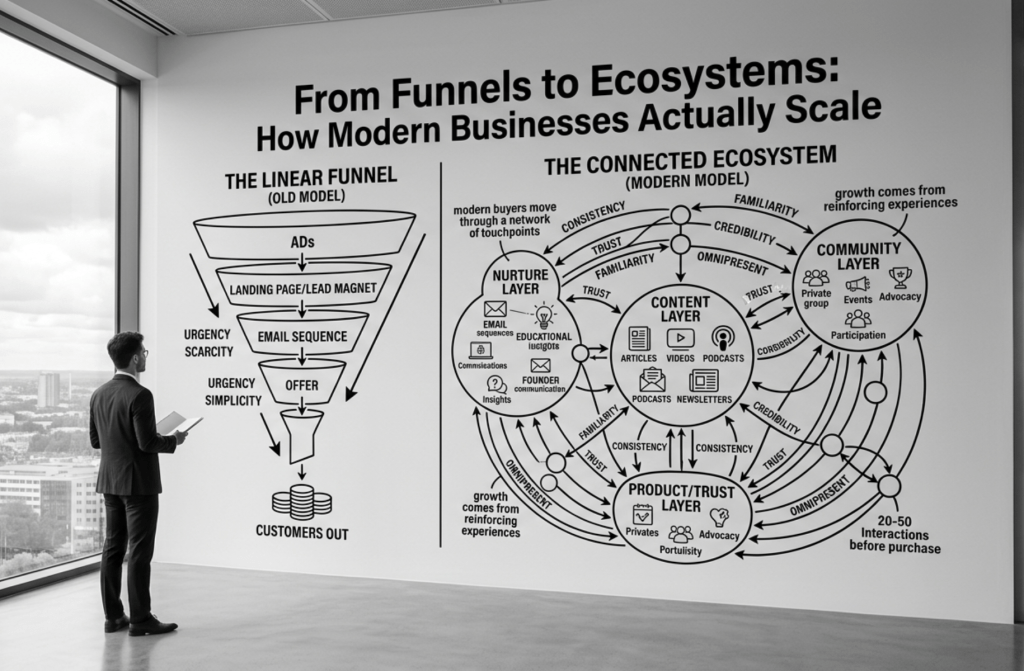
The old school funnel model—cold lead → opt-in → email sequence → hard pitch—is showing its age.
It worked when information was scarce. When attention was easier to capture. When people were more trusting of systems that promised shortcuts.
But today’s consumer is more discerning, more informed, and more emotionally intuitive than ever.
They can spot a one-size-fits-all pitch from a mile away.
And more importantly? They’re tired of it.
Funnel fatigue is real.
The modern buyer doesn’t want to be pushed into a predetermined path.
They want to feel seen, supported, and respected throughout their journey.
This is why magnetic marketing is rooted not in pressure, but in presence.
Not in pushing people down a funnel, but in creating an ecosystem of value that meets them where they are.
The Value Ecosystem: A More Human Model
Rather than relying on one path to conversion, magnetic brands create a multi-touchpoint experience that meets psychological needs along the way—needs like curiosity, safety, trust, and autonomy.
Here’s what that looks like:
Short-form content:
Reels, carousels, stories, shorts
These act as micro-moments that spark awareness and resonance.
They answer small questions, agitate real frustrations, and create tiny epiphanies.
This content isn’t meant to convert immediately—it’s meant to connect emotionally.
Psychology Insight: This taps into the Zeigarnik Effect, where people are more likely to remember incomplete thoughts. Tease an idea and they’ll stick around for more.
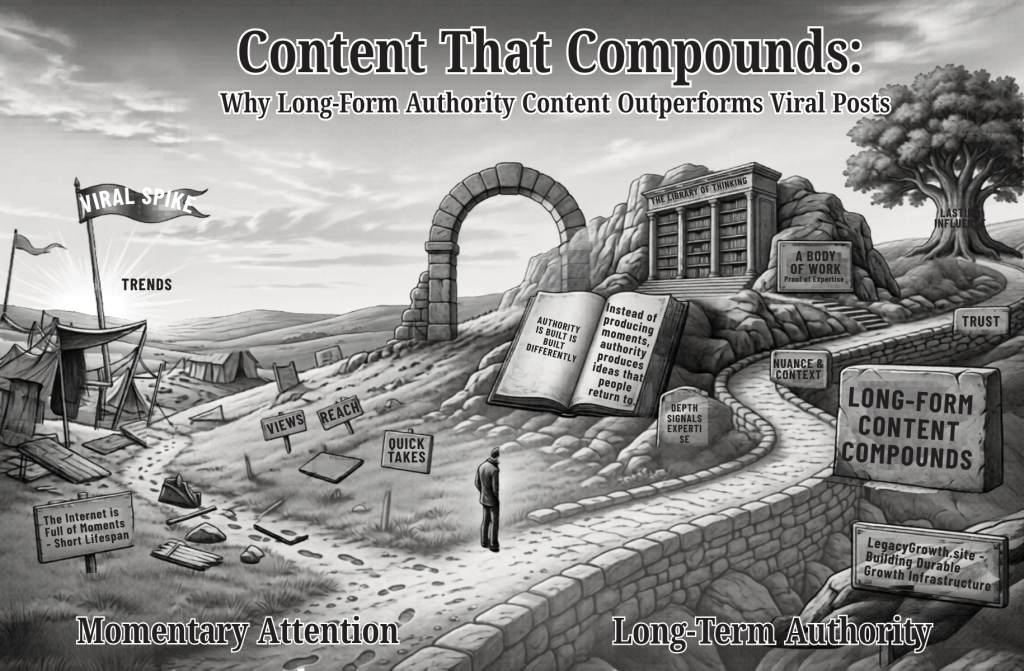
Long-form content:
Blog posts, email sequences, trainings, YouTube videos
This is where trust is built and beliefs are reshaped.
Here, you have the space to guide them through their objections, offer transformation stories, and show proof of depth—not just hype.
Psychology Insight: Long-form content taps into the elaboration likelihood model, where thoughtful, analytical buyers (the ones who don’t impulse-buy) are persuaded through strong logic and trust-building over time.
Offers:
Clear, aligned, and anchored in the buyer’s goals—not your revenue goals.
Your offer should feel like the natural next step in a relationship, not a sales trick.
Psychology Insight: This is where choice architecture matters. When your offers are positioned with simplicity, relevance, and clarity, people feel in control—and therefore more empowered to say yes.
Why Ecosystems Work Better Than Funnels
A funnel assumes all buyers move through the same emotional arc.
An ecosystem honors that each person enters your world at a different level of awareness, readiness, and belief.
In an ecosystem:
- Some will binge your content quietly for weeks before they buy.
- Others will opt into your list and sit there until one story finally shifts their perspective.
- Some will buy on day one—but only because your value trail was strong before they ever landed on your page.
The point is: your system shouldn’t just catch leads—it should nurture belief.
Because when people believe, they buy without being pressured.
And when your brand becomes a resource, not a pitch machine,
you move from selling to serving.
That’s where conversion becomes effortless.
Because belief has already done the heavy lifting.
Be the Brand That Pulls, Not Pushes
“The goal of marketing is to make selling superfluous.”
— Peter Drucker
Magnetic marketing isn’t just a better funnel.
It’s a better frequency.
It’s a shift in energy—from urgency to alignment.
From interruption to invitation.
From shouting into the void to speaking directly to people who feel like you’re reading their mind.
This shift is powered by three things:
- Psychological clarity (you know who you’re speaking to and what they need to believe)
- Scalable systems (your backend supports the front-end magnetism without burnout)
- Creative integrity (you’re not just chasing clicks—you’re building a legacy)
When you stop chasing and start resonating, everything changes:
You no longer need to over-explain.
You no longer fear being “too niche.”
You no longer worry about competition—because no one else can match your alignment.
The more rooted you are in your truth,
the more magnetic your brand becomes.
And the right people?
They won’t need convincing.
They’ll feel like they’ve found home in your message.
Start with the psychology.
Build with intention.
Create with clarity.
And trust that when you become magnetic, the right people can’t help but come closer.


 Legacy Growth Blog
Leave a reply to Operations Management: The Hidden Engine Behind Scalable, Profitable Growth – Legacy Growth Blog Cancel reply