
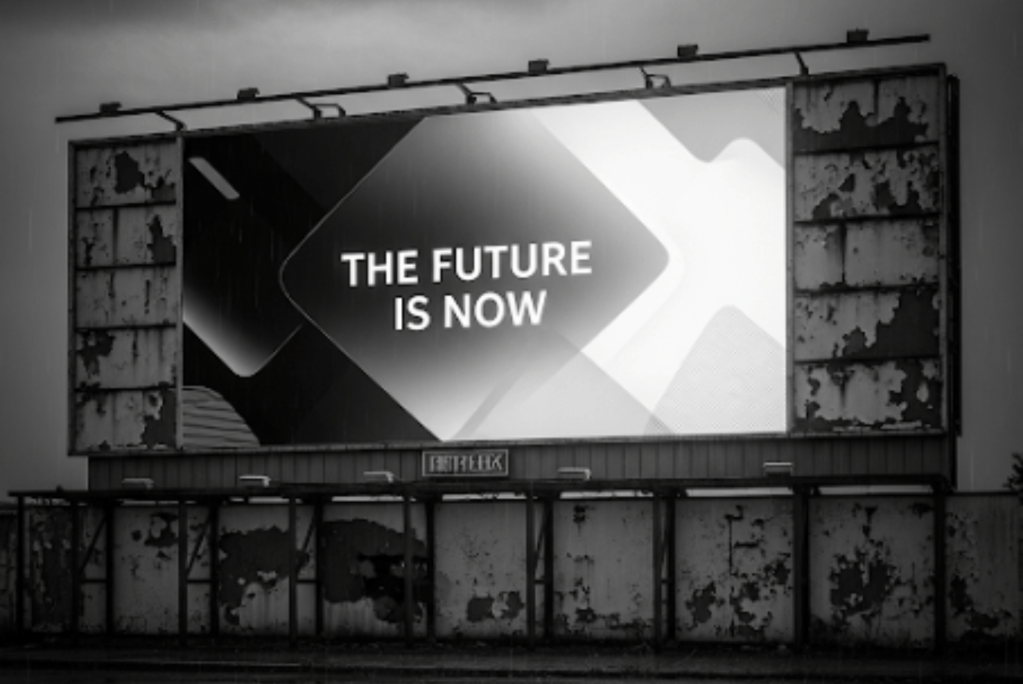
In a time when digital connection shapes nearly every purchase decision, traditional advertising tactics like billboards seem almost quaint. Yet many business owners, especially in service-based industries, continue to invest in them, chasing visibility without evidence of impact.
This isn’t a post about tearing down the past. It’s about aligning with present-day behavior, and more importantly, with what your customer actually sees, feels, and responds to.
The marketing landscape hasn’t just shifted. It has evolved, quietly but completely. And for those still relying on billboards, the misalignment isn’t just inefficient. It’s costly.
Attention Has Moved. Has Your Strategy?
Drive down any highway today, and you’ll still see them: rows of signs declaring sales, slogans, and promotions. But inside those vehicles, something else is happening. Passengers are streaming podcasts. Drivers are listening to GPS directions or catching up on texts at red lights. The “eyeballs” that billboards were designed to attract simply aren’t looking anymore.
It’s not just about distraction. It’s about behavior. We now live in a mobile-first, data-driven attention economy. Your audience no longer consumes information passively. They curate it, often unconsciously, based on relevance, timing, and platform. And they expect the same of you.
This shift requires more than tactics. It requires understanding how people make decisions and building marketing systems that align with that journey. For a deeper look at how attraction-based strategies outperform interruption-based advertising, read “Magnetic Marketing: The Psychology of Building a Brand That Draws In the Right People”.
The Structural Weakness of Billboard Marketing

There’s a reason billboards feel less effective now. It’s not just about format, it’s about fundamental gaps in how they function:
- Lack of targeting: One message for every passerby. No segmentation. No personalization.
- No traceable ROI: You can’t track engagement, click-through, or conversion. Just assumed impressions.
- Static and expensive: High upfront costs. Limited creative flexibility. Locked-in messaging that can’t adapt.
In a world where marketing budgets are expected to perform, not just appear, billboards offer almost no accountability. For growth-focused businesses, that’s more than a limitation – it’s a liability.
Marketing Isn’t About Being Seen. It’s About Being Remembered.
Most business owners don’t need more visibility – they need more meaningful interactions. Billboards attempt to manufacture trust through exposure. But trust in 2025 is built through relevance, consistency, and behavior-driven connection.
This is the shift: from broadcasting to curating. From generic impressions to strategic brand architecture that speaks directly to the right audience with the right message.
This distinction is central to how LegacyGrowth works with clients to build systems. As outlined in “You Can’t Scale Chaos: Why Legacy Growth Consulting Exists”, scaling your brand without structure leads to wasted effort and inconsistent results.
Modern Marketing Is a System, Not a Channel
The most effective businesses today aren’t those shouting the loudest. They’re the ones building systems that align with the customer’s journey.
Let’s look at how that system works:
1. Audience Architecture Comes First
Before a message is crafted, a client avatar is defined. Not just by age or location, but by behavior, beliefs, and objections. Modern marketing begins with insight, not assumption. This is part of the strategic foundation we cover deeply in our Magnetic Marketing approach.
2. Behavioral Targeting Replaces Blind Placement

Instead of placing a message on a highway, we place it where people are actively searching, engaging, and researching. Platforms like Google Ads and Meta allow us to follow intent, not just proximity.
3. Nurture Systems Do the Heavy Lifting
Once a lead is captured, email and SMS campaigns drive personalized follow-up. These aren’t mass blasts, they’re carefully curated, behavior-informed messages that guide the prospect forward.
This kind of automation, when done well, frees up time without sacrificing authenticity. For insights on how to build automation with precision, not chaos, explore our post: “Leveraging Virtual Assistants to Scale With Precision, Not Chaos”.
4. Retargeting Creates Familiarity
A billboard has one chance to connect. Digital retargeting gives you multiple opportunities to reconnect with leads who are already familiar with your brand. It’s not pushy, it’s present.
5. Feedback Loops Refine the Message
Every action a lead takes (or doesn’t take) becomes insight. Modern marketing systems adjust in real-time – adapting offers, timing, and messaging based on behavior. It’s not just smart. It’s adaptive at scale.
For a systems-thinking perspective on how to use AI and automation without losing the human touch, read “AI Isn’t the Answer—But It Can Accelerate the One You Design”.
How Many Touchpoints Does It Take to Convert a Lead?

It’s no longer 7. Or 12. Or any “magic number.”
Modern marketing experts suggest that depending on lead temperature, brand familiarity, and offer complexity, conversion could require anywhere from 5 to 50 touchpoints. (RecruitersWebsites)
Touchpoints now include everything from social proof to abandoned cart reminders, from value-add content to SMS nudges. The idea of relying on a single billboard – briefly glimpsed and quickly forgotten—feels not just risky, but almost irrelevant.
And for a strategic breakdown of how to map modern customer touchpoints, see this guide by HubSpot, which outlines how each stage of the buyer’s journey requires different types of engagement.
Billboards Can’t Follow Your Customer. But Your Message Can.
Your customer doesn’t live in one place, and neither should your marketing.
Modern systems allow your message to follow your ideal client across platforms and moments, not just across roads. From a Google search to an Instagram story to a text reminder, every touchpoint reinforces the last. Together, they create momentum.
Billboards can’t do that. But your digital ecosystem can.
So What’s the Alternative? A System Built for How People Actually Decide.
At LegacyGrowth, we don’t believe in replacing old tactics with new tools for the sake of novelty. We believe in building strategy around behavior, and then automating that strategy with systems that scale.
That includes:
- Avatar-informed messaging
- Segmented nurture sequences across email and SMS
- Intent-driven ad funnels
- Retargeting loops
- And visibility strategies that move leads from cold to converted, without pressure
It’s not about being loud. It’s about being strategic, present, and aligned.
Final Thoughts: Marketing Built for Legacy, Not Just Leads

Every business wants more leads. But at some point, every founder realizes: it’s not the lead that creates growth – it’s the system behind the lead that determines what happens next.
The businesses thriving today aren’t chasing visibility. They’re building intentional, behavior-aligned systems that create trust, relevance, and momentum over time.
Because legacy isn’t built by being seen once.
It’s built by being remembered often, and engaged meaningfully.
If you’re ready to rethink how your marketing works, or you simply need help knowing where to start in this new digital-first, systems-driven landscape, we’re here to help you design what comes next.
Book a Discovery Call and let’s explore what your business actually needs to grow with clarity, sustainability, and intention.







Leave a comment