

Business owners tell me the same thing over and over:
“If I could just get more leads, my business would finally grow.”
But if you’ve ever thought that way, let me push back gently: you probably don’t have a lead generation problem. You likely have a lead qualification problem.
The funnel might be wide, but it’s leaky. And more volume won’t fix leaks, it just creates more waste.
The Funnel Is Wide at the Top – But That’s Not the Problem
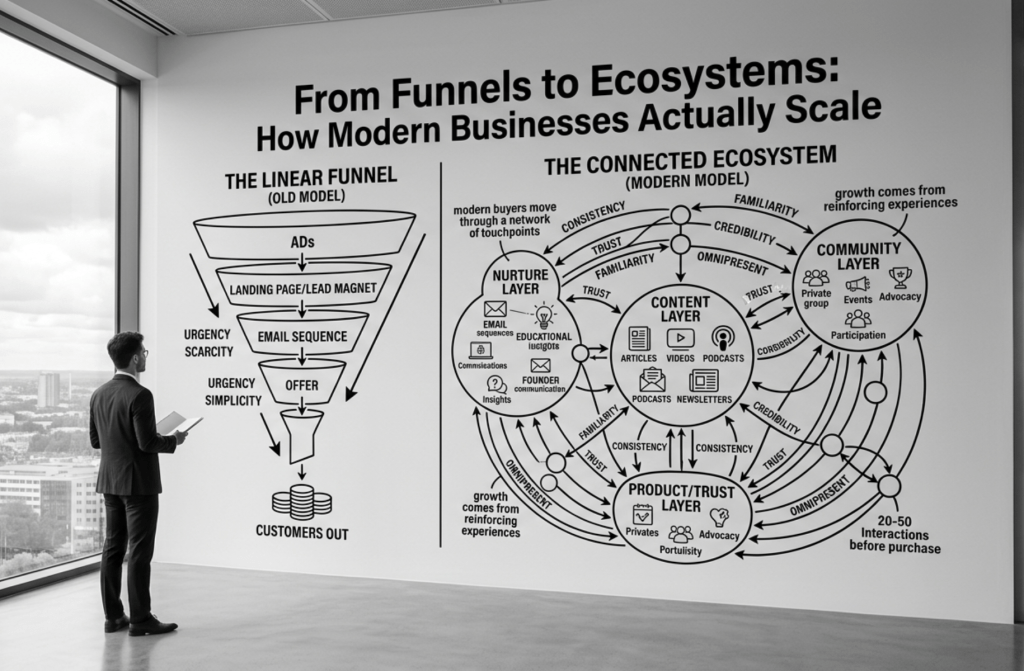
Every funnel starts with attention: ads, posts, networking, referrals. That’s the easy part. Getting someone to click a button or drop an email is not the same as qualifying them.
The average close rate across industries is about 20% (HubSpot). For high-ticket offers, a 30-40% closing rate is considered strong, but only if the leads are qualified. If they’re not, the math falls apart.
Let’s say you generate 100 leads. If only 20 of them are actually qualified, and you close 30%, that’s just six clients. It doesn’t matter how wide your funnel is if you’re pouring the wrong people into it.
Why Most Funnels Fail: Undefined Client Avatars

At Legacy Growth Consulting, we trace most of these problems back to one missing piece: a clear client avatar.
Your client avatar isn’t just a vague persona. It’s a blueprint of:
- Their pain points
- Their buying triggers
- The language they use to describe their needs
- The platforms and spaces where they actually spend time
Without this clarity, your funnel attracts a random mix of people: some curious, some totally unfit, and a few who might be perfect but can’t see themselves in your messaging.
This is why our first step with clients is often reworking their offer stack and avatar positioning: because once you know exactly who you’re speaking to, everything else sharpens. Ads perform better. Content resonates deeper. And qualification happens earlier in the funnel.
Two Primary Paths: Paid Ads and Content
There are really only two scalable paths to new customers:
- Paid Advertising – Google, Meta, LinkedIn, and YouTube campaigns. These can deliver speed and volume but require strong targeting and clear positioning to avoid wasted spend.
- Content Creation – Social posts, blogs, newsletters, YouTube, LinkedIn thought leadership. These build authority and trust over time but require consistency and strategy.
Networking and referrals have their place, but they’re unpredictable. Organic traffic works, but only if it’s aligned with your avatar. Otherwise, you’re just entertaining strangers.
The businesses that grow the fastest find the right blend:
- Paid ads for scale and predictability.
- Content for authority and long-term nurture.
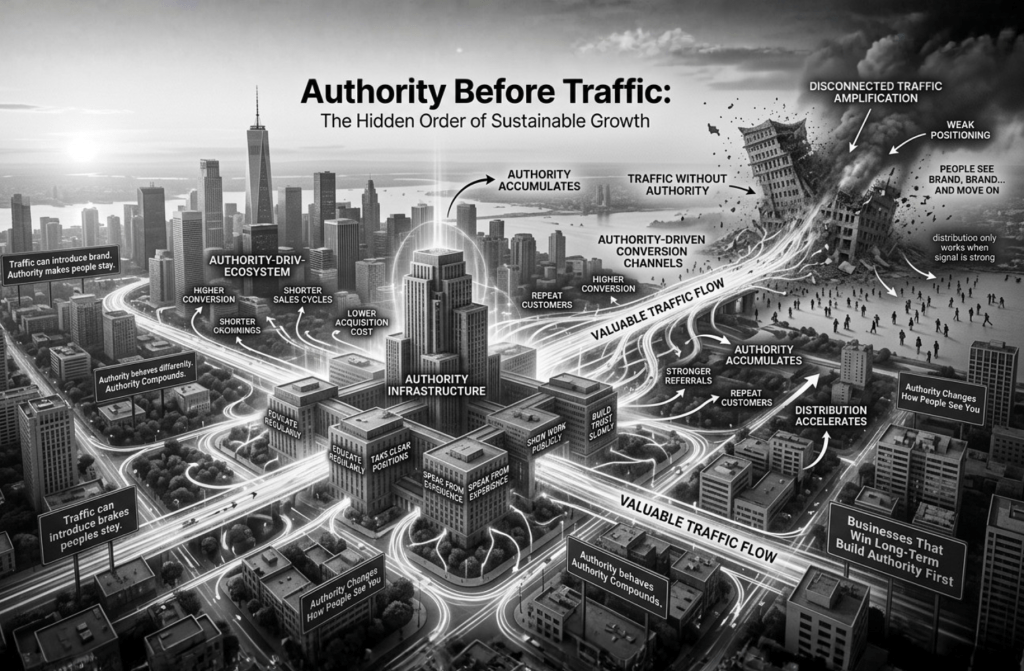
(We broke this down further in our post about billboards and modern digital growth, where we argued why omnipresence and retargeting outperform “one-and-done” placements.)
It’s Not Just Touchpoints, It’s Time-in-Market Engagement

Marketers love to talk about touchpoints. You’ll hear the stat that it takes 6–12 touchpoints for a customer to buy. Sometimes, it’s even higher—we’ve seen up to 50 touchpoints in the wrong funnel (Legacy Growth Billboard Post).
But here’s the nuance: it’s not just about the number of touches. It’s about the total time a lead spends engaging with you.
Someone might see your ad 20 times and still not feel ready. Another might binge your 30-minute webinar, read two blogs, and be ready to book a call. The quantity of touches matters less than the quality of engagement.
That’s why modern funnels require a mix of automated touchpoints and rich, time-worthy content.
Which brings us to our proprietary framework.
The Legacy Growth Framework: Time-in-Market Engagement
We think about the conversion journey less in terms of “touches” and more in terms of time stages:
- Awareness Time – The minutes a prospect spends discovering you. Ads, posts, podcasts, short clips. The goal is recognition.
- Consideration Time – The hours they spend evaluating you. Blog posts, case studies, webinars, nurture emails. This is where authority builds.
- Decision Time – The focused time before purchase. Sales calls, demos, proposal reviews. This is where intent is validated.
Each stage requires different content and automation. Short-form ads might spark awareness, but retargeting ads plus long-form content (like the blog you’re reading right now) extend consideration. Automated email and SMS nurture keep the conversation alive until decision time.
The longer your audience spends meaningfully engaging with your material, the more likely they are to buy.
Automation as a Qualification Engine

Here’s the good news: you don’t need to manually chase every lead through this journey. With smart automation and AI integrations, you can:
- Score and filter leads based on behavior (e.g., webinar attendance, email opens, page visits).
- Retarget cold leads automatically across platforms until they warm up.
- Personalize emails, DMs, and SMS responses to answer common objections at scale.
This ensures sales teams and founders only spend their decision time with those already moving toward qualification.
Closing the Loop: Lead Qualification Before Lead Generation
If your funnel feels broken, here’s the checklist:
- Are you attracting the right people, or just anyone?
- Do you have a defined client avatar, or are you still guessing?
- Are you measuring success by the number of leads, or the quality of conversations?
Because until you tighten qualification, adding more leads will only multiply the frustration.
At Legacy Growth Consulting, we help founders refine their avatars, architect their offer stacks, and implement the automation systems that filter leads before they hit sales. That’s how you go from leaky funnels to clean pipelines—and from inconsistent revenue to scalable growth.
Final Thought
You don’t need more leads. You need better leads. And to get those, you need clarity, qualification, and systems.
If you’ve been struggling with low close rates, wasted ad spend, or feeling buried under unfit prospects, the problem isn’t volume, it’s structure.
Let’s fix that.
Book your complimentary discovery call and let’s build you a funnel that qualifies as it scales.



 Legacy Growth Blog
Leave a reply to Why Most Founders Burn Out Before They Scale, and How Systems Fix It – Legacy Growth Blog Cancel reply