Walk through any online marketing forum, scroll Instagram for five minutes, or sit in on a high-ticket coaching webinar, and you’ll see it:
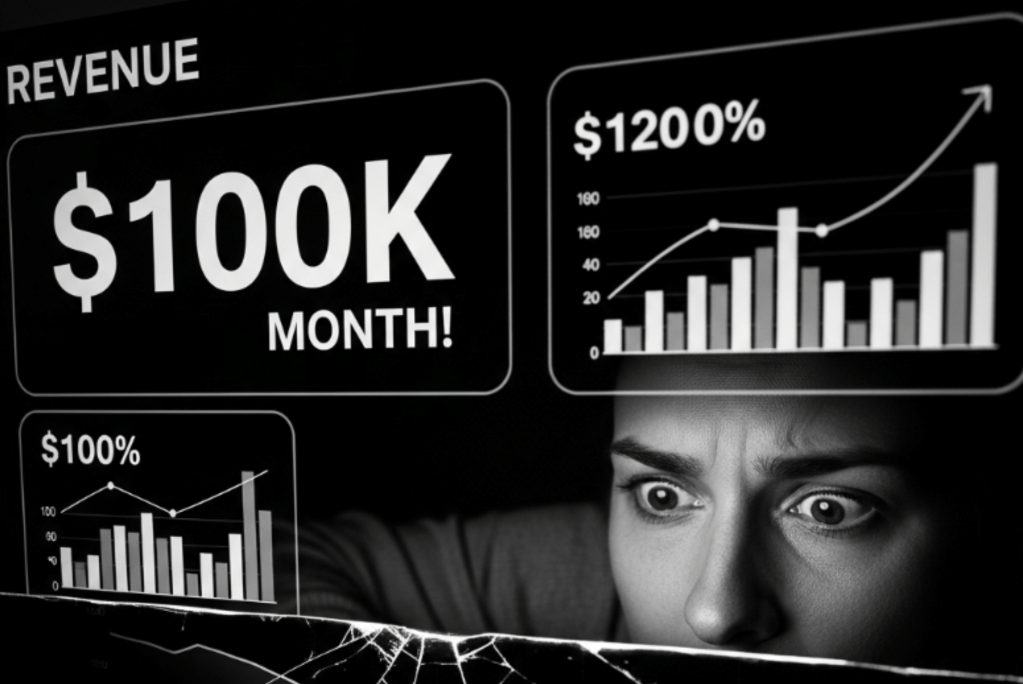
“Hit a $100K month!”
“Scaled to 7 figures in under a year!”
“Tripled our revenue using just Facebook Ads!”
The stories are polished. The screenshots are impressive. The momentum seems undeniable.
But if you’ve ever run ads yourself, or tried to reverse-engineer these claims, you’ll start to notice the missing piece: the cost of acquisition. The part no one posts in their caption.
So you ask the obvious question:
“How much did they spend to make that $100K?”
More often than not, the answer falls somewhere between $85K and $90K in ad spend.
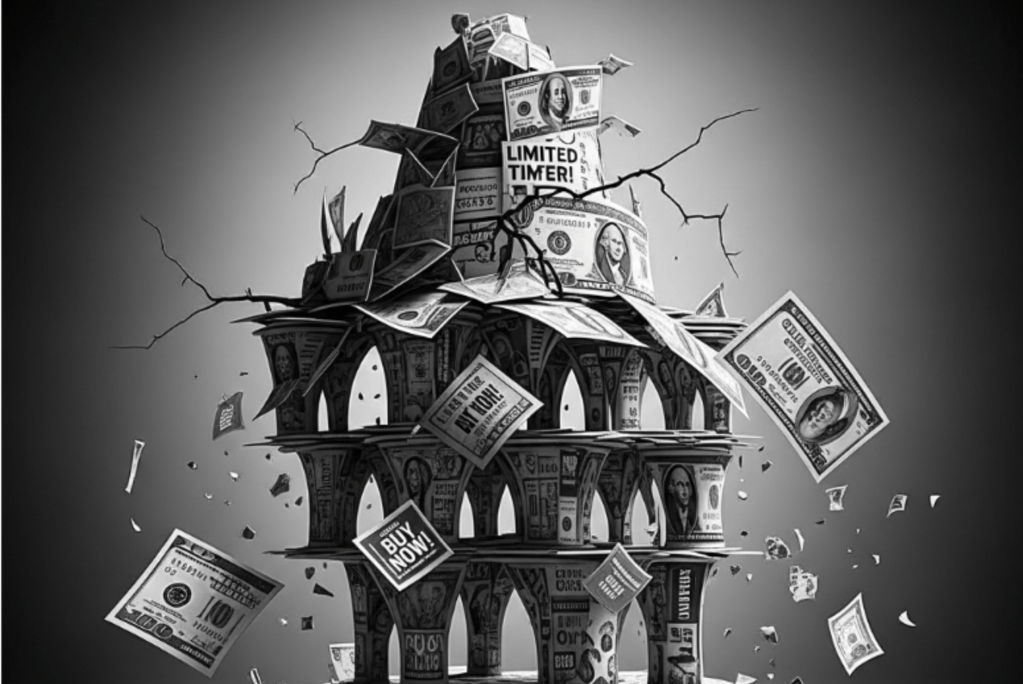
Let’s be clear: that’s not success. That’s a balancing act on the edge of a knife.
What you’re seeing isn’t sustainable profitability. It’s velocity marketing—chasing topline revenue to mask fragile economics. High burn, low margin, maximum stress.
And the platforms love it.
Meta, Google, TikTok—they all profit whether you break even or bleed out. The system is designed to encourage aggressive spend, keep you chasing performance spikes, and convince you that if it didn’t work, you just need to “optimize your creative” or “raise your budget.”
But the reality is this:
The paid ad ecosystem you’re participating in isn’t built for small, sustainable brands anymore.
It’s built to serve the platforms—and the biggest players feeding their algorithms the most data.

At LegacyGrowth.life, we work with entrepreneurs who are starting to wake up to this.
Smart founders who’ve seen the inside of their ad dashboards and realized:
“We’re not scaling. We’re treading water—spending more and more just to stay in place.”
They’re not looking for another ad agency. They’re not trying to “hack” the system one more time. They’re looking for a way off the treadmill.
And that starts with understanding that paid advertising in 2025 isn’t the same beast it was in 2020—or even 2022.
What used to be a lever for growth is now a rigged system built on three undeniable shifts:
1. AI-Driven Ad Platforms Are No Longer Transparent or Controllable
You don’t choose where your ads show up. You don’t fully control who sees them. The AI does. Tools like Meta Advantage+ and Google Performance Max are black boxes—handing you just enough data to feel “informed,” but not enough to diagnose what’s actually working.
And guess who benefits?
Advertisers with massive data pipelines and high budgets. Because in a world of AI optimization, the algorithm rewards volume, not savvy.
2. Costs Are Rising—and Will Keep Rising
CPMs are up. CPCs are volatile. Privacy regulations have kneecapped retargeting. Every click costs more, converts less, and takes longer to optimize. This isn’t temporary. It’s the new cost of playing the game.
3. Platform Incentives No Longer Align With Advertiser Success
Meta doesn’t care if your campaign is profitable. It cares that you keep spending. The longer your campaign runs—even if it’s barely breaking even—the better for them. The system is built to absorb your budget, not protect it.
2016–2019: The Golden Era of Paid Ads

Once upon a time, Facebook Ads felt like a cheat code.
CPMs were low. Targeting was precise. Organic reach still had legs. You could run a small $500 campaign, optimize manually, and watch as leads poured in. It felt like the closest thing to digital alchemy.
This was the era where many DTC brands exploded into the market. Ads were cheap, competition was lower, and the platforms hadn’t yet centralized power in their AI systems.
If you were early, strategic, and agile, you could win big.
But this era had a quiet expiry date. Most didn’t see it coming.
2020–2022: The Cracks Begin to Show

COVID-19 drove everyone online—and with it came a flood of new advertisers. Supply didn’t keep up with demand. Ad costs started rising fast. But that was just the beginning.
Then came Apple’s iOS 14.5 privacy update in 2021, gutting Meta’s ability to track users effectively. Attribution got murky. Retargeting performance dropped. ROAS shrank overnight.
Studies from the time show that even when ads “worked,” results vanished the moment campaigns stopped (Dai & Luca, 2016). This pointed to a deeper truth: paid ads were becoming more like a tap than a funnel—turn them off, and so goes the traffic, the leads, and the revenue.
Still, many businesses held on. They adjusted budgets, tested creatives, hired ad agencies, and hoped to return to earlier performance.
But hope isn’t a strategy—and the next wave made that painfully clear.
2023–2025: The AI Power Shift
AI took over. And it didn’t ask for permission.
Platforms like Meta and Google introduced “black box” advertising systems: Meta Advantage+, Google Performance Max. You feed the machine some creative, define a goal—and the system takes over everything else.
No more manual bidding. No more detailed targeting. No more testing one audience against another.
This was billed as a win—“Let AI optimize for you!” But what wasn’t advertised?
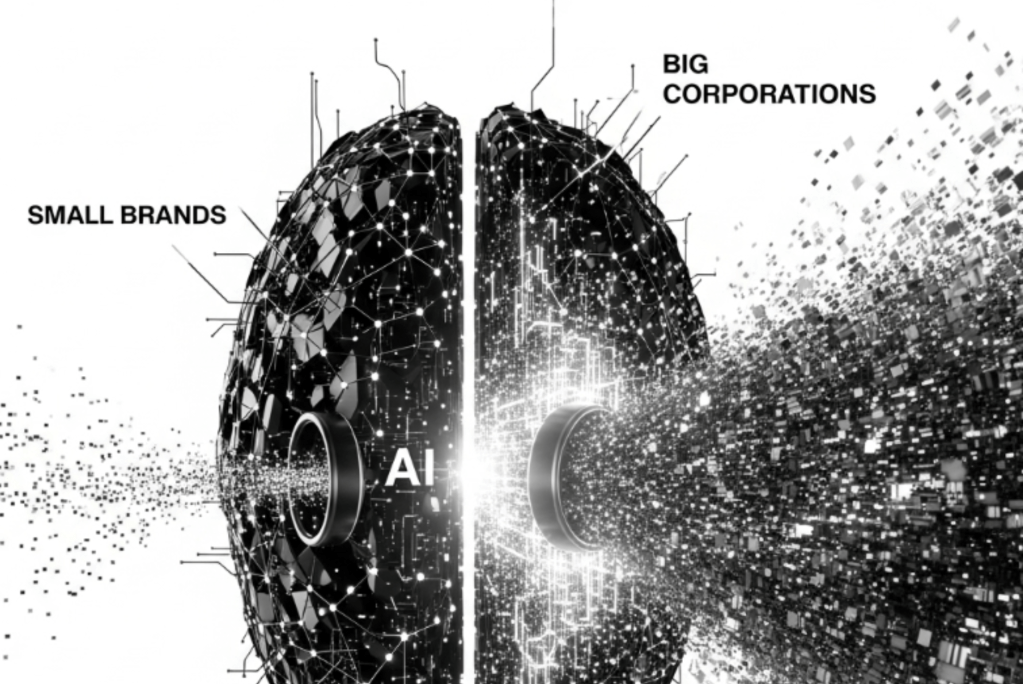
These systems overwhelmingly favor high-budget, data-rich accounts—which means they favor big corporations.
As a small brand, you’re simply not feeding the algorithm enough volume to optimize effectively. And because the platforms hide key performance details, you’re left guessing.
This has led to what one study calls “opaque optimization environments”—where advertisers are forced to trust algorithms that reveal little about why ads succeed or fail (Yang et al., 2023).
In practical terms?
You’re spending $3,000 a month on Meta, trying to replicate what used to work—while your competitor is feeding the AI $50,000 a week and generating data 10x faster.
You’re not playing the same game.
And if you’re not careful, you’ll be led to believe you’re just doing it wrong.
The Platform Problem: Why the System Is Rigged for Scale
Let’s be clear: Meta and Google are still wildly effective advertising engines—for some brands. But their model now prioritizes:
- Scale over strategy
- Data volume over creative control
- Machine learning performance over human optimization
Which means your handcrafted offer, thoughtful funnel, or bootstrapped campaign is now competing against multinational brands with dedicated teams, massive budgets, and years of performance data.
It’s not a question of talent. It’s a question of inputs—and the machine rewards the ones who can feed it most consistently.
Why “Winning” Doesn’t Always Mean Profit

Here’s the most deceptive part:
Even in this rigged system, you can still show “wins.”
It’s not uncommon for a founder to hit $100K in revenue from paid ads—only to realize they’ve spent $85K in media, $10K in agency fees, and another $5K in software just to keep it running.
There’s nothing left.
No margin. No profit. And worse: no foundation.
Because when the ads stop, so does the business.
This is the hamster wheel we help founders step off.
At LegacyGrowth, We Help You Build the System Behind the Spend
We work with entrepreneurs who are tired of chasing algorithm crumbs and ready to build long-term, profitable growth engines.
If you’re just launching and hoping paid ads will build your business—you need a different plan.
If you’ve already got traction but your paid performance is flattening or draining your margins—we’ll help you restructure.
We won’t sell you silver bullets.
But we will help you make sense of what’s working now, in the real world—not what worked five years ago or what ad gurus are showing you on Instagram.
Here’s what that looks like:
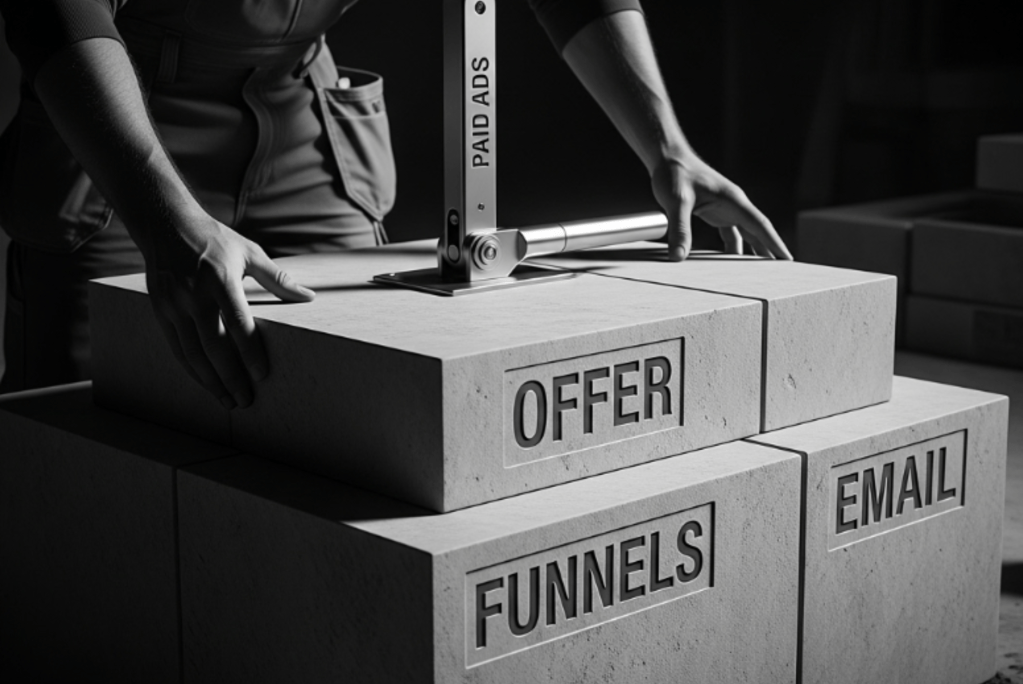
- Restructuring your offer and funnel so that conversions happen without gimmicks
- Building conversion-optimized landing pages that do the selling for you
- Using paid ads surgically, not blindly
- Doubling down on email, retention, and first-party data
- Rebuilding your organic visibility so you’re not at the mercy of CPMs
You don’t need more hacks.
You need a system that makes you less dependent on platforms—and more profitable every time you do choose to run ads.
Let’s Talk. Really.
We’re offering a free strategy call for entrepreneurs who want to step off the ad treadmill and start building smarter.
No sales pitch. No pressure. Just a real, grounded conversation about what’s working, what’s not, and what it would take to scale profitably in this landscape, not the one from five years ago.
Book your free call now at LegacyGrowth.life
This is for founders who know that “winning” at ads isn’t just about making numbers look good—it’s about building a business that lasts.
Because behind every screenshot showing $100K in revenue, there’s often a P&L sheet covered in red ink.
Let’s make sure that’s not your story.







Leave a comment