

Ask any business owner what makes them different and watch what happens. The person who can diagnose a client’s problem in ninety seconds suddenly produces a string of words that could belong to any competitor in their industry. Quality. Service. Results. We really care.
This is not a communication failure. It is a perspective problem, and it might be the most expensive blind spot in business.
You cannot read the label from inside the jar. You are standing inside your own story, and from inside, the remarkable parts look ordinary.
Familiarity is the enemy of storytelling
Here is the trap. The things that make you genuinely different are, by definition, the things you do every day. And anything you do every day stops registering as notable. The unusual way you onboard clients, the question you always ask that nobody else asks, the reason you structured your business the way you did, all of it has faded into wallpaper for you. It is just how things are done.
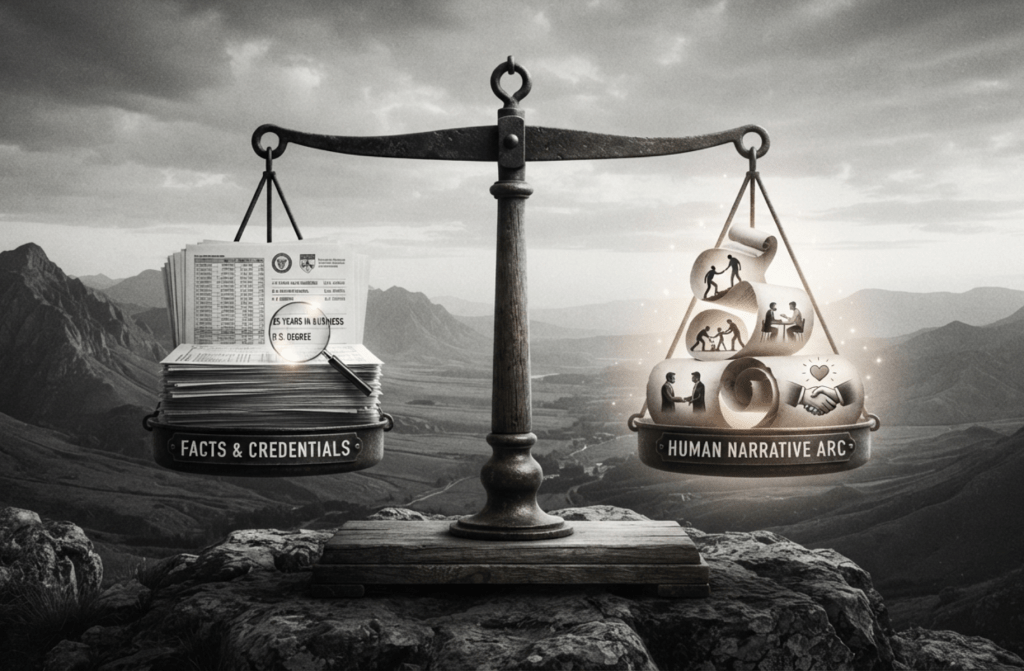
Meanwhile, the things you think are impressive, the credentials, the years in business, the awards, are usually the things every competitor also says. So owners lead with the interchangeable parts and bury the differentiating parts, not out of modesty, but because they literally cannot see them anymore.
Your future clients are not scrolling for a service. They are scrolling for someone who sounds like the answer they have been circling for months. The tragedy is that most owners are that answer and describe themselves as a category instead.
The mindset shift: your story is data, not decoration
High performers often dismiss story as fluff. The numbers should speak. The work should speak. Story feels like something you add for marketing, like a garnish.
The successful reframe is this: your story is not decoration on top of the business. It is the compressed history of every decision that makes your business what it is. Why you started, what you saw that others missed, what you refuse to do that competitors happily do, which client changed how you work. These are not anecdotes. They are the actual differentiators, delivered in the only format human beings are wired to remember.
Facts inform. Stories transfer trust. A prospect can forget your service list in a day. They will repeat your origin story to their spouse at dinner.
Owners who internalize this stop asking “what should I post?” That question has no good answer because it starts from a blank page. They start asking “what do I know that I have forgotten is unusual?” That question has endless answers, and every one of them is content only you can make.
Borrowed eyes
If the problem is that you are too close, the solution is not trying harder to see. It is borrowing eyes that stand outside the jar.
This is why the best content so often comes out of conversation rather than composition. Alone with a blank document, you reach for the safe, generic version of yourself. In a real conversation, with someone asking real questions, you say the unguarded thing, and the unguarded thing is almost always the good thing.
We have watched this exact moment on every Content Day we have ever filmed. About twenty minutes into the interview, something shifts. The rehearsed answers run out, the real ones start, and the owner says something true they have never said in their marketing before. Half the time they do not even notice it happened. We do, because we have seen a hundred versions of a hundred businesses, and our whole job is to walk in from the outside and point at the part that matters.
That moment cannot be self-generated. Nobody interviews themselves past their own script.
Get outside the jar
Three years ago we gave up having an office and moved our agency into an RV. We have spent every year since traveling the country, filming business owners in fifty different places, watching how people actually live, work, struggle, and build. The single biggest lesson from the road is this one: every business has a story worth telling, and almost nobody is telling it right. Not because owners are bad at their story. Because they are standing inside it.
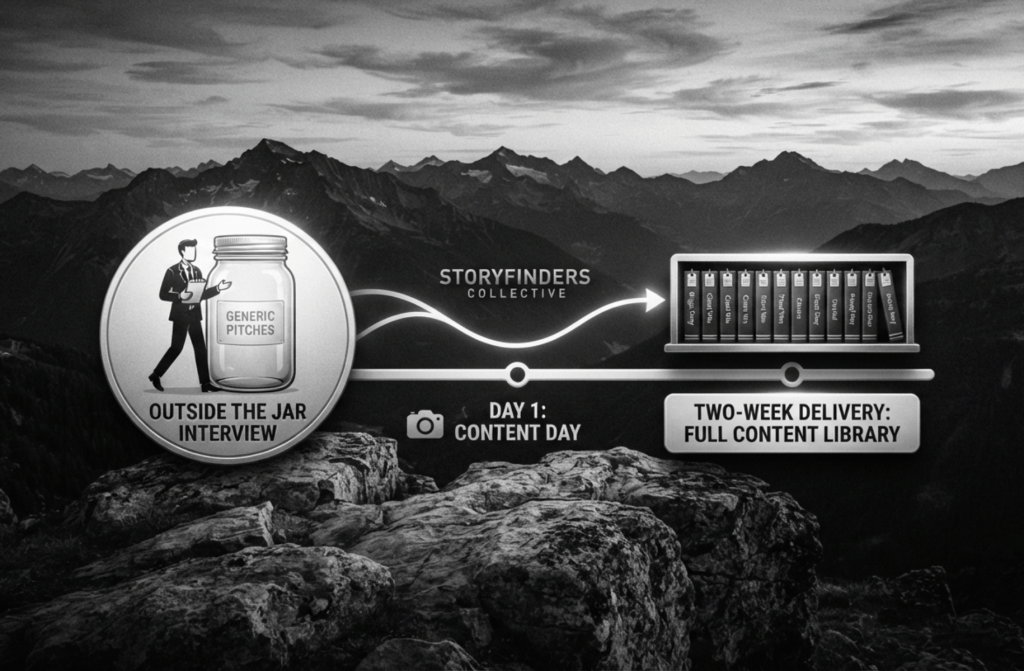
Content Day exists to capture the story you have been too close to see. We come to you. A 45 minute brand identity interview gets past the elevator pitch and into the reason you actually started. Then 2.5 hours of guided filming turns that truth into footage, and two weeks later you have a full library that finally sounds like you.
One day. Two weeks to delivery. A story you could never have told alone.





Leave a comment