
There is a quiet fear that shows up in almost every conversation we have with a successful advisor. They will not say it first, and they will usually say it sideways, but it amounts to this: “I have no idea if this will keep working.” The practice is healthy. The clients are happy. And underneath it is a low hum of anxiety about where the next ten clients actually come from.
That fear is not a weakness. It is diagnostic. It is the precise feeling of owning a referral program and mistaking it for a marketing engine. They are not the same business.
The difference, defined
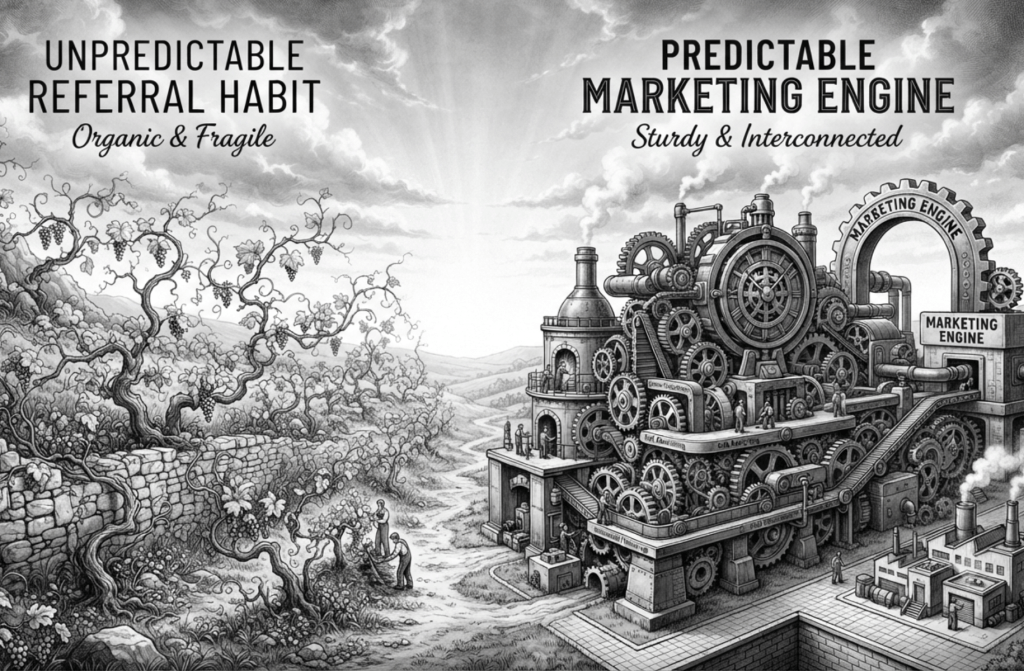
A referral program is unforecastable, uncontrollable, and unsellable. You cannot predict what it will produce next quarter, you cannot turn it up when you need more, and you cannot hand a buyer a firm whose growth lives entirely in other people’s goodwill.
A marketing engine is the opposite: you can forecast it, you can turn it up, and it survives you.
That is the whole distinction, and it is worth sitting with, because most advisors have the first and are convinced they have the second. Happy clients and steady referrals feel like a growth engine. But if you cannot control it, predict it, or sell it, it is not an engine. It is a very good habit that other people are kind enough to maintain on your behalf.
Why advisors default to the referral program
There is no fault in this. The referral program is where every good advisor starts, and for a long time it is enough. It worked. It felt free. It required nothing but doing good work and being trustworthy, which you were going to do anyway. Of course firms lean on it. The problem is not that they built a referral program. The problem is that a referral program has a ceiling, and most firms hit it without noticing, because the decline is gradual, referrals do not stop, they just stop scaling.
What an engine is actually made of
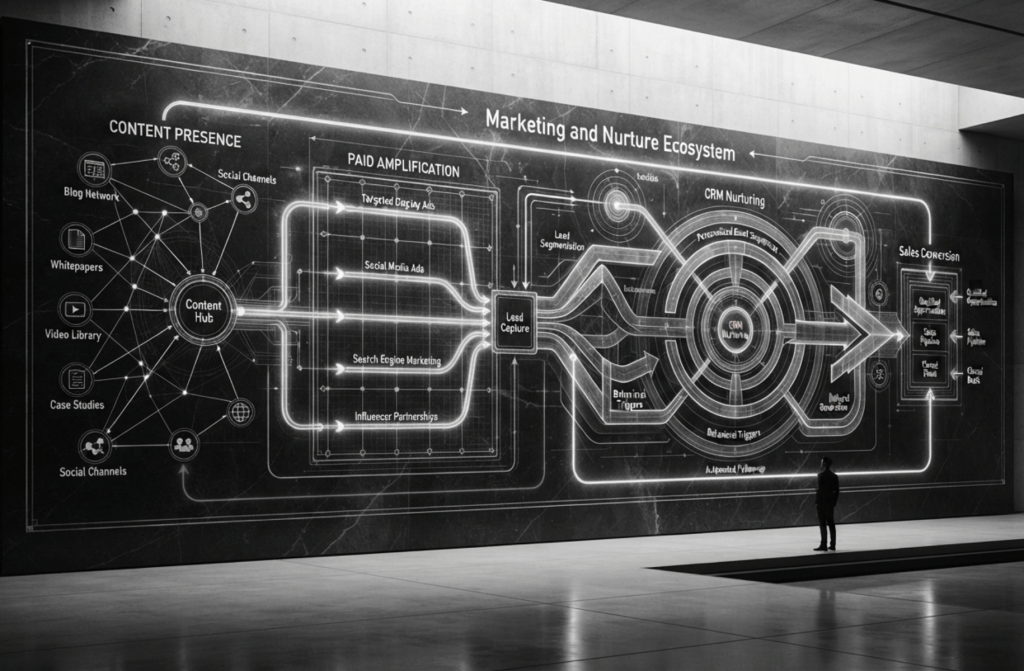
An engine is not a single tactic. It is the parts working together: an organic presence that makes you findable and credible, paid advertising that reaches people before they are searching, a CRM that catches and nurtures every lead, and follow-up that does not depend on anyone remembering. Alone, each of these is a channel. Together, wired to each other, they become a system that produces qualified conversations on a schedule, which is the definition of the thing the referral program can never be.
None of it replaces referrals. That is the part firms get wrong when they finally decide to “do marketing.” You are not tearing out the referral program. You are building an engine around it, so that referrals become one input to a system rather than the entire system.
The transition
The shift from referral program to engine is not a campaign you run once. It is a change in what kind of business you are building. It starts with the foundation, the presence and the systems, moves into organic growth that compounds, and matures into a predictable flow you can actually forecast and improve. It takes time, and the firms that get there are the ones that understood from the start they were building an asset, not running a promotion.
[Case study slot] Reserve space here for a real story: “Here is what building the engine looked like for one firm, and what it produced.” Fill only with client consent and real, defensible numbers. If no consented story is available, cut this block cleanly, the post stands on principle without it. This is the single highest-impact addition the piece can receive.
Which business are you building?
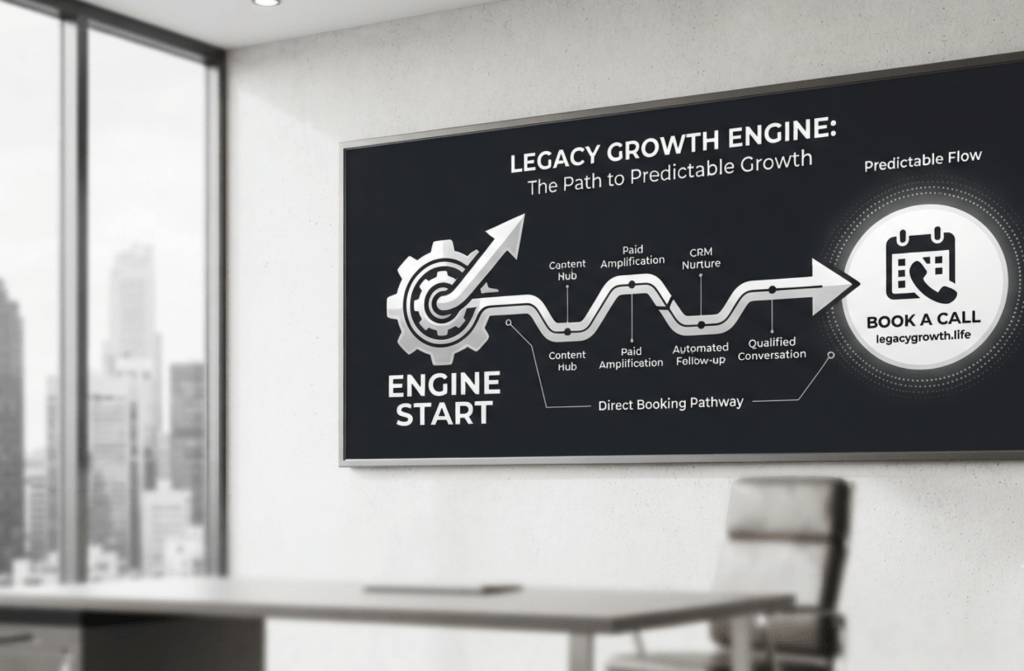
So the honest question is not whether your marketing is good. It is whether you have an engine or a referral program wearing an engine’s clothes. If the thought of forecasting next year’s new clients makes you uneasy, you already know the answer, and the good news is that the fear is fixable. You build the engine. That is a conversation worth having. Book a call with us a https://legacygrowth.life to learn more.




 Legacy Growth Blog
Leave a comment