
How Heuristics, Proof, Consistency, and Cognitive Bias Shape Buying Decisions in the Digital Era
Every day, a stranger decides whether or not they trust you.
Not in person, not through a handshake, not by looking you in the eyes, but through pixels on a screen.
Modern trust is built digitally.
And yet most entrepreneurs treat trust like an afterthought.
They post without intention.
They build funnels without psychological grounding.
They launch offers without proof.
They assume people will “get it,” even though the human brain evaluates strangers in milliseconds.
In reality, trust is not random.
It follows predictable psychological patterns rooted in heuristics, cognitive bias, identity, and consistency.
If you want someone who has never met you to buy from you, you must understand how humans process trust online.
This is where most businesses fail.
The Brain Uses Heuristics to Decide Trust Instantly
A heuristic is a mental shortcut the brain uses to make fast judgments.
Online, people evaluate your brand through these shortcuts without ever realizing they’re doing it.
Common heuristics that shape brand trust:
The Aesthetic-Usability Heuristic
If your brand looks clean, credible, and modern, people assume it is reliable.
If your brand looks outdated or inconsistent, people assume it is risky.
This is why we emphasize unified brand identity in:
Why Brand Identity Is the Foundation of Every Successful Business
Your visuals don’t just “look nice.”
They influence trust at a subconscious level.
The Availability Heuristic
People believe what they see repeatedly.
The more your brand appears in their feed, inbox, or search results, the more trustworthy you seem.
This is why omnipresent content ecosystems are not optional.
Visibility builds familiarity, and familiarity builds trust.
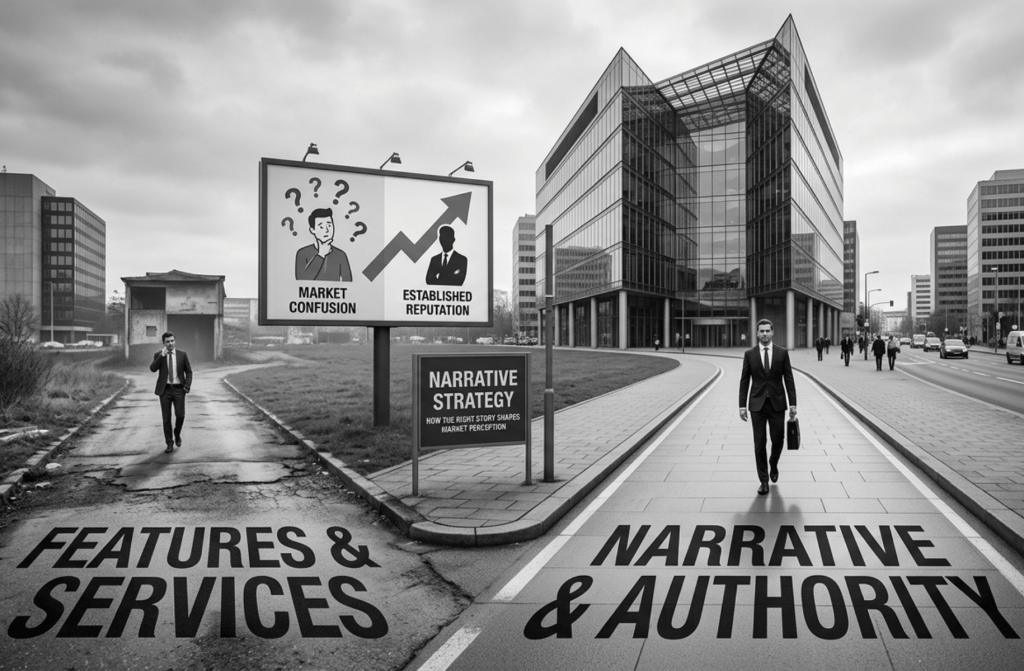
The Authority Heuristic
Humans trust those who appear to have expertise.
This means even small signals like:
• thoughtful long-form content
• clear messaging
• structured frameworks
• well-written blogs
• polished websites
• consistent social presentation
can dramatically increase perceived authority.
Trust begins long before someone enters your funnel.
Cognitive Bias Determines Whether People Believe Your Message
Consumers don’t make decisions through logic alone.
They make decisions through bias.
Some of the most influential buying biases include:
- Confirmation Bias
People look for evidence that confirms what they already believe.
If your brand messaging validates their worldview, they trust you faster. - Social Proof Bias
Testimonials, reviews, screenshots, and case studies tell the brain:
“If other people trust this, I can trust this.”
This is why we emphasize proof of concept across our clients’ digital ecosystems.
Without proof, modern buyers rarely convert.
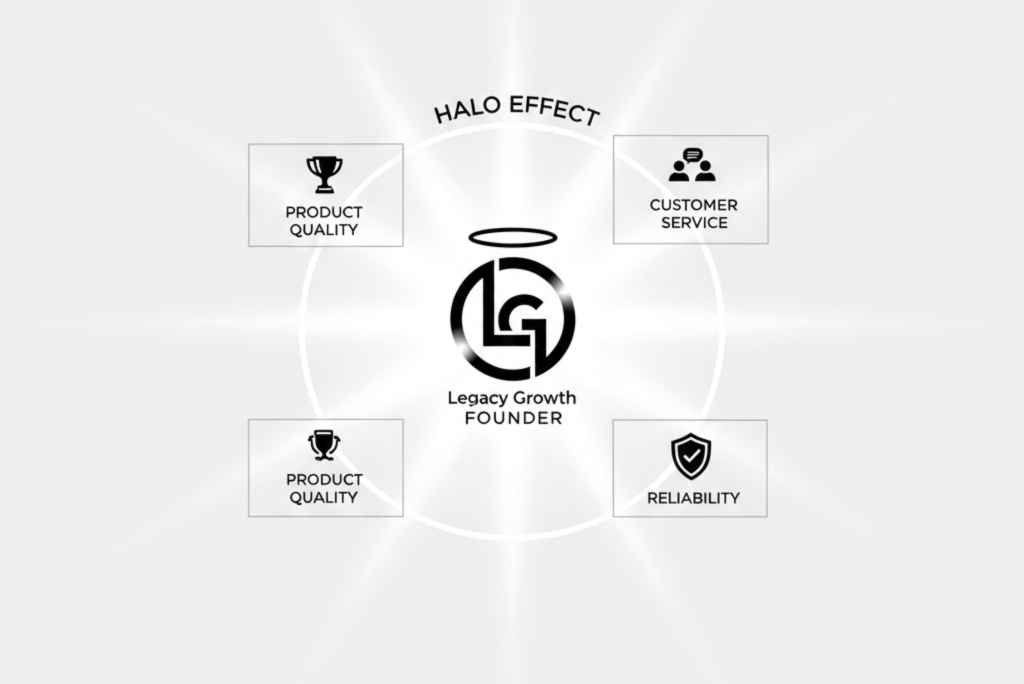
- The Halo Effect
If one part of your brand shines, people assume the rest is equally strong.
This is why a well-designed site or a powerful founder brand can elevate the perception of everything else. - Loss Aversion Bias
People fear losing more than they value winning.
Trust is built when your brand reduces perceived risk.
That happens through:
• transparency
• clarity
• strong offer positioning
• simple next steps
• consistent messaging
If a buyer feels safe with you, they buy.
Proof of Concept Is Now the Primary Trust Signal
In 2025, consumers research everything.
They use Google, Reddit, TikTok, YouTube, and AI models to verify your credibility.
They ask:
Does this person know what they’re talking about?
Has this business done this before?
Do they have results?
Do they have consistency?
Do they feel real?
This is why your ecosystem must include:
• testimonials
• reviews
• case studies
• client stories
• screenshots
• founder commentary
• behind-the-scenes process
• transparent offer positioning
Proof moves people from interest to certainty.
We explored this dynamic deeply in:
Social Media vs. Websites: Which Matters More for Business Growth in 2025?
Platforms change.
Trust psychology does not.
Brand Consistency Creates Safety for the Brain
Humans trust what feels predictable.
Consistency is a major trust signal.
When a stranger sees:
• the same tone
• the same visuals
• the same values
• the same positioning
• the same messaging
across your content, website, and funnels, their brain says:
“This person is stable. This brand is aligned.”
When your presence is inconsistent, scattered, vague, or contradictory, the brain says:
“This feels unsafe.”
Consistency is more important than perfection.
It anchors your brand identity and makes you recognizable.
This is why we emphasize brand clarity before marketing tactics in every client engagement.
Why People Buy: The Trust Equation Behind Every Sale
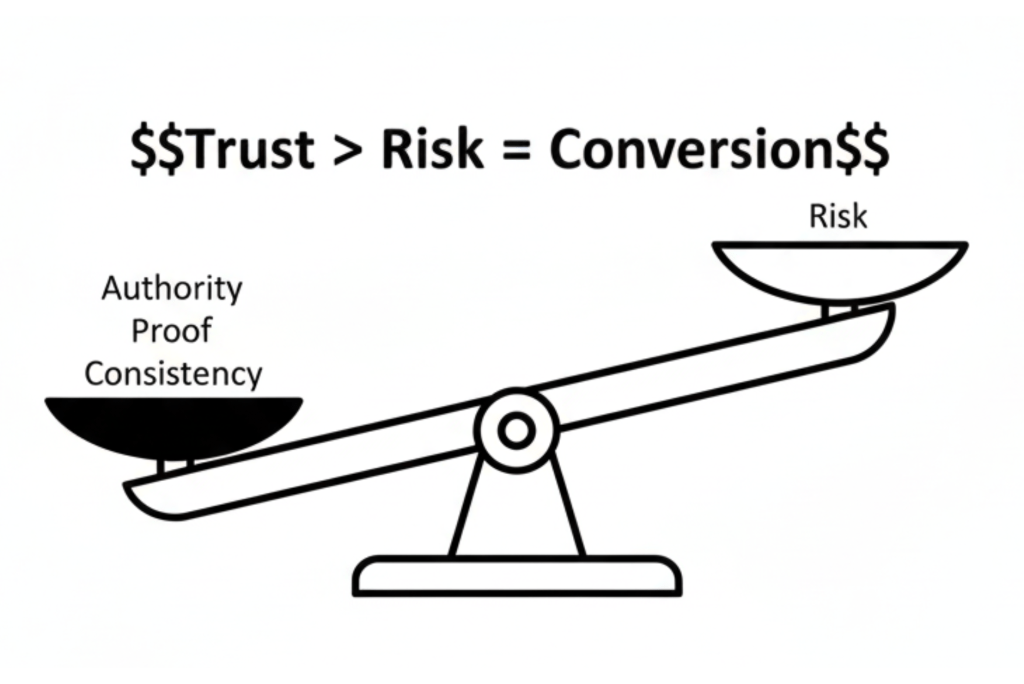
Every online purchase, no matter how small or large, follows the same mental model:
Trust > Risk = Conversion
If trust outweighs perceived risk, the sale happens.
If risk outweighs trust, the buyer hesitates.
Trust comes from:
• your personal brand
• your authority
• your values
• your consistency
• your proof
• your clarity
• your messaging
Risk comes from:
• confusion
• inconsistency
• unclear value
• lack of proof
• weak positioning
• poor presentation
• mixed messaging
The sale is won or lost based on the psychological balance between these two forces.
This is exactly why funnels fail.
It’s not because of traffic.
It’s because they lack emotional connection and psychological clarity, as we explored in:
Why Most Funnels Don’t Fail at Conversion, They Fail at Connection
Trust drives connection.
Connection drives conversion.
What It Takes to Build Trust in a Noisy, AI-Saturated Market
Trust must be engineered intentionally.
Your brand needs:
• a clear, unified identity
• strong offer positioning
• consistent social presence
• long-form authority content
• email nurturing
• proof assets
• transparent messaging
• a stable founder voice
This is where businesses either take off or stall.
Trust is not built through volume.
It is built through alignment.
People believe you when everything you produce feels coherent, credible, and grounded.
If You Want to Increase Conversions, Strengthen Trust
At Legacy Growth Consulting, we build trust-based ecosystems for a reason.
Ads, funnels, and content all depend on your ability to establish credibility with strangers.
If you want to strengthen the trust in your brand, refine your messaging, and create a psychologically grounded strategy, a strong place to begin is our Strategy Session and Executive Plan.
In 90 minutes, we evaluate the trust signals across your entire ecosystem and deliver a tailored roadmap to create alignment, proof, and authority.

Explore the offer here:
https://legacygrowth.life/strategy-session-and-executive-plan
Trust is not built by accident.
It is built strategically.



 Legacy Growth Blog
Leave a reply to Why Your Offers Aren’t “High Ticket” — They’re Just High Priced – Legacy Growth Blog Cancel reply