


For most of modern advertising history, the strategy was simple.
Interrupt people.
A television show pauses for commercials.
A radio program breaks for sponsors.
A magazine inserts advertisements between articles.
The assumption was straightforward: if enough people see the message, some of them will eventually respond.
For decades, that model worked.
But the internet quietly changed the rules.
Today, interruption is everywhere. And because of that, interruption works less and less.
What works now is something different.
Permission.
When Attention Became Scarce
At first, the internet looked like the perfect advertising environment.
You could reach anyone.
You could track every click.
You could scale campaigns globally with a few tools.
But as platforms grew, something unexpected happened.
Consumers adapted.
People learned to ignore banners.
They skip ads automatically.
They scroll past sponsored content without even noticing it.
The problem is not that marketing exists.
The problem is that attention has become scarce.
And when something becomes scarce, it becomes valuable.
The Silent Filter
Modern consumers move through the internet with a built-in filter.
They decide in seconds whether something deserves their attention.
If it feels promotional, they move on.
If it feels repetitive, they ignore it.
If it feels like another attempt to sell them something immediately, they skip it entirely.
This filtering process happens almost subconsciously.
Most people cannot explain exactly why they trust certain brands and ignore others.
But the difference often comes down to a simple question:
Does this brand respect my attention?
The Brands People Choose to Listen To
Interestingly, people still consume enormous amounts of content every day.
They read newsletters.
They listen to podcasts.
They follow thoughtful voices on social media.
They watch long interviews and educational videos.
None of this content interrupts them.
They choose it.
That choice is the foundation of the permission economy.
Instead of forcing attention, brands invite it.
Instead of interrupting, they contribute.
The Value Exchange
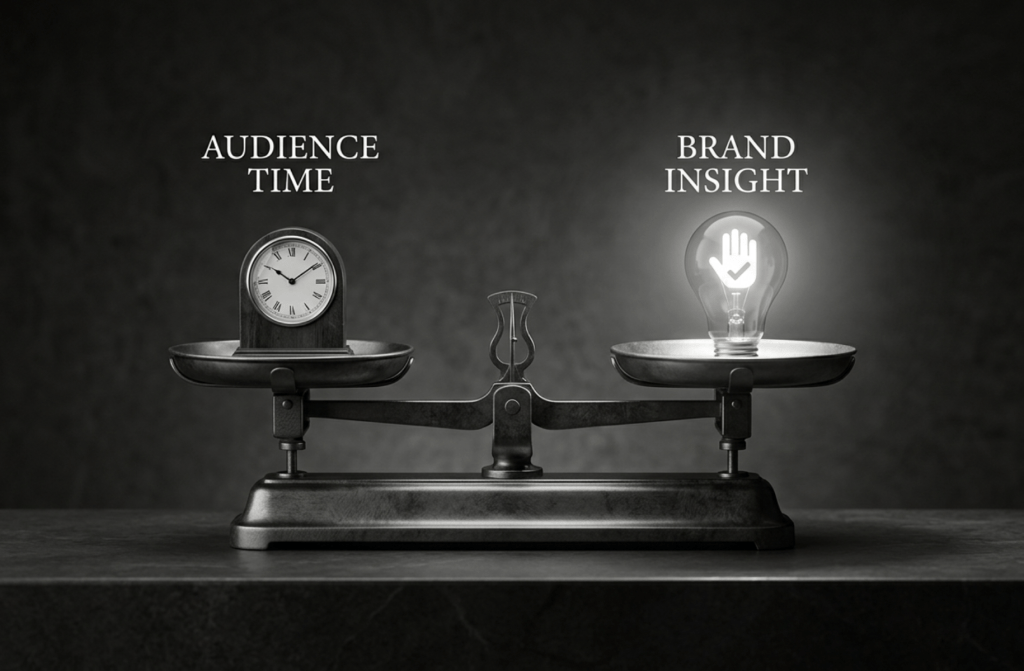
Permission-based attention always involves a clear exchange.
The audience offers their time.
The brand offers something valuable in return.
Insight.
Education.
Perspective.
Clarity.
When this exchange works well, marketing stops feeling like marketing.
It begins to feel like learning.
Readers come back because the ideas are useful.
Listeners return because the conversations are thoughtful.
Subscribers stay because the content helps them think more clearly about their problems.
Over time, the brand becomes associated with value rather than promotion.
The Difference Between Renting Attention and Earning It
Advertising can still generate visibility.
But visibility created through paid promotion is often temporary.
Once the budget disappears, the attention disappears as well.
In many ways, paid advertising rents attention.
Permission-based attention behaves differently.
When someone subscribes to a newsletter, they invite your voice into their inbox.
When someone follows your thinking online, they choose to see your ideas again.
When someone shares your content with a friend, they extend that permission further.
The relationship becomes voluntary.
And voluntary relationships tend to last longer.
Why Education Builds Trust
One of the fastest ways to earn permission is through education.
When a brand explains complex ideas clearly, it demonstrates something important.
Competence.
Teaching signals that the company understands the problem deeply enough to break it down.
Over time, the audience begins to rely on that clarity.
They return when they want to understand the topic better.
They trust the source that helped them see the problem differently.
And once trust forms, the brand is no longer just a vendor.
It becomes a guide.
The Long-Term Advantage

Permission-based marketing is rarely the fastest approach.
It takes time to build a following.
It takes consistency to maintain attention.
It requires patience to allow relationships to develop gradually.
But once those relationships exist, they create powerful advantages.
Customers trust the brand before they ever make a purchase.
Conversations begin with familiarity rather than skepticism.
And the company no longer needs to constantly fight for attention.
The audience chooses to listen.
When Attention Becomes a Relationship
The most successful brands today understand something simple.
Attention is not a commodity.
It is a relationship.
Every article, every podcast, every thoughtful insight is an opportunity to strengthen that relationship.
Each time a brand respects the audience’s time, trust deepens.
Each time it interrupts unnecessarily, that trust weakens.
The companies that win long-term are the ones that treat attention carefully.
Not as something to capture.
But as something to earn.
The Future of Marketing
As digital noise continues to grow, attention will become even more valuable.
And the brands that thrive will not be the loudest.
They will be the most respected.
They will publish ideas worth reading.
They will teach instead of shouting.
They will show up consistently without overwhelming their audience.
Because in the permission economy, growth does not come from forcing attention.
It comes from becoming the brand people choose to hear from.
Book Your Discovery Call
Most businesses do not struggle because they lack marketing tools.
They struggle because their growth systems were never designed to build trust and authority at scale.
At Legacy Growth, we don’t sell hacks. We build durable growth infrastructure.
If you want your time back, your energy back, and your growth back, let’s talk.

➡️ Book a strategy call with LegacyGrowth.life
We’ll audit your current work structure, show you exactly what to delegate, and help you build a VA system that compounds.
No gimmicks. Just execution that actually works.




 Legacy Growth Blog
Leave a comment