


For most of the last forty years, a financial advisor could build a healthy practice without ever running a marketing campaign. A few good relationships, a reputation for doing right by clients, and the referrals took care of the rest. It worked. That is exactly the problem.
Referrals got most firms where they are. They will not get them where they are going. The advisors who are pulling ahead right now are the ones who stopped treating marketing as something other people do and started building it as a system. What follows is the honest version of what that takes, without the vendor gloss.
1. Referrals are a channel, not a strategy
A referral is a wonderful thing. It is also something that happens to you rather than something you do. You cannot forecast it, you cannot turn it up when revenue dips, and you cannot sell a firm whose growth depends entirely on other people’s goodwill. A channel you do not control is not a strategy. It is a hope with a good track record.
The firms that break past their referral ceiling do not abandon referrals. They build a system around them so that growth stops depending on whether this quarter’s centers of influence happened to be generous.
2. Compliance is not the reason you can’t market. It’s the reason most agencies won’t.
Advisors are told, constantly, that their industry is too regulated to market effectively. It is not. It is regulated in ways that most marketing agencies do not understand, which is a completely different problem. The SEC Marketing Rule governs what an advisor can say, but it does not prevent an advisor from building a genuine, consistent presence. It just means the team doing it has to know the rules cold.
Most agencies do not, so they either avoid the vertical or produce work that quietly creates compliance exposure. The constraint is real. It is also a moat for anyone willing to learn it.
3. Paid ads don’t work without a foundation
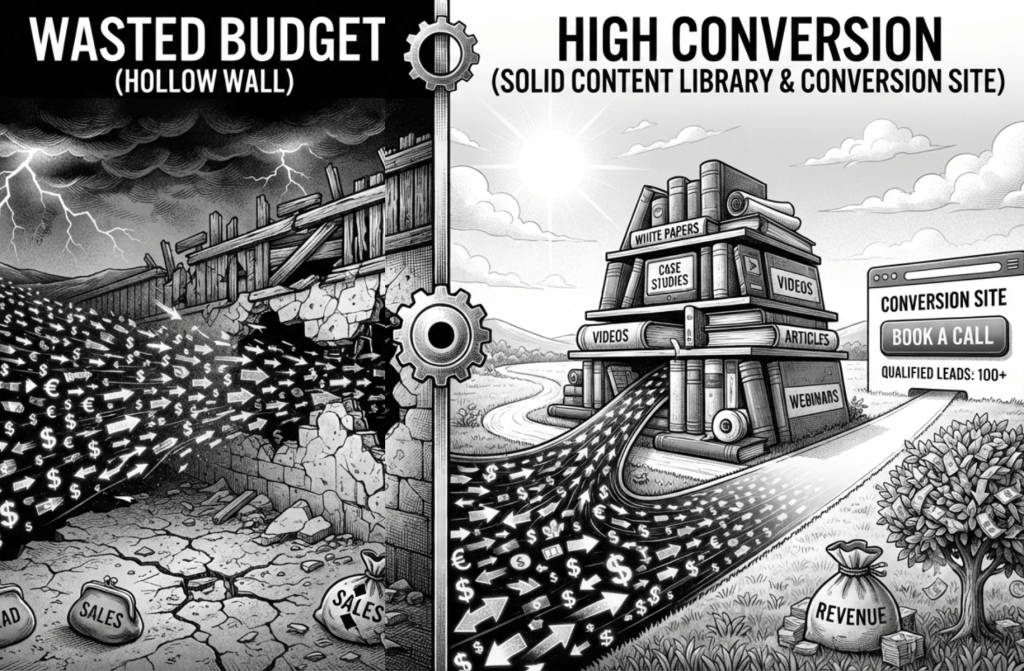
This is the mistake that burns the most advisor ad budgets. A firm decides to grow, puts money into Google or Meta, points it at a thin website, and concludes after ninety days that “ads don’t work for advisors.” The ads were never the problem. Paid traffic amplifies whatever it lands on, and when it lands on nothing, it amplifies nothing.
A prospect who clicks an ad and then searches your name should find a real presence: a clear site, content that demonstrates how you think, a way to book that does not feel like a cold call. Build that first. Then paid becomes a multiplier instead of a leak.
4. The slow channels compound. The fast channel converts.
Organic content and email do not produce a spike. They produce trust, slowly, over months, and most firms quit before the compounding starts. Paid advertising does the opposite: it converts quickly but only harvests demand that already exists. The firms that win run them in sequence, not in isolation, the slow channels build the trust, and paid harvests it at the moment of intent.
Run only the slow channels and growth feels invisible for a long time. Run only paid and you are renting attention you never get to keep. The sequence is the strategy.
5. Your CRM is a marketing asset, not an address book
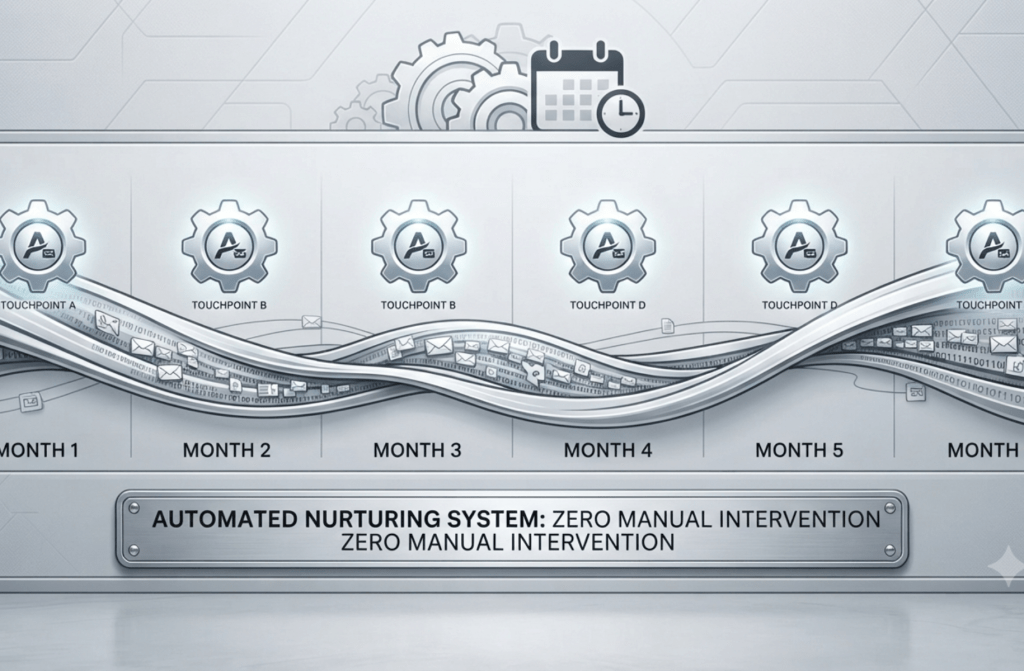
Ask most advisors where their revenue leaks and they will point to lead generation. The bigger leak is usually follow-up. A prospect who was not ready in March is ready in September, and the firm that stayed in front of them without being annoying is the one that wins the relationship. That is a CRM job, and it is the least glamorous, highest-return system an advisory firm can build.
Automation here is not about volume. It is about never dropping a warm relationship because someone got busy.
6. “Proven” performance claims are a trap
The instinct, when you have delivered well for clients, is to say so with numbers. In wealth management, that instinct is dangerous. Performance advertising is the single most regulated corner of the SEC Marketing Rule, and the shortcut of showing a strong result without the required context is the fast track to a problem. The good news is that trust in this business is built far more by demonstrating how you think than by advertising what you returned.
We wrote a full plain-English guide to what the Marketing Rule does and does not allow. If you take one thing from this list, make it that one.
7. The firms that win treat marketing as a system, not a campaign
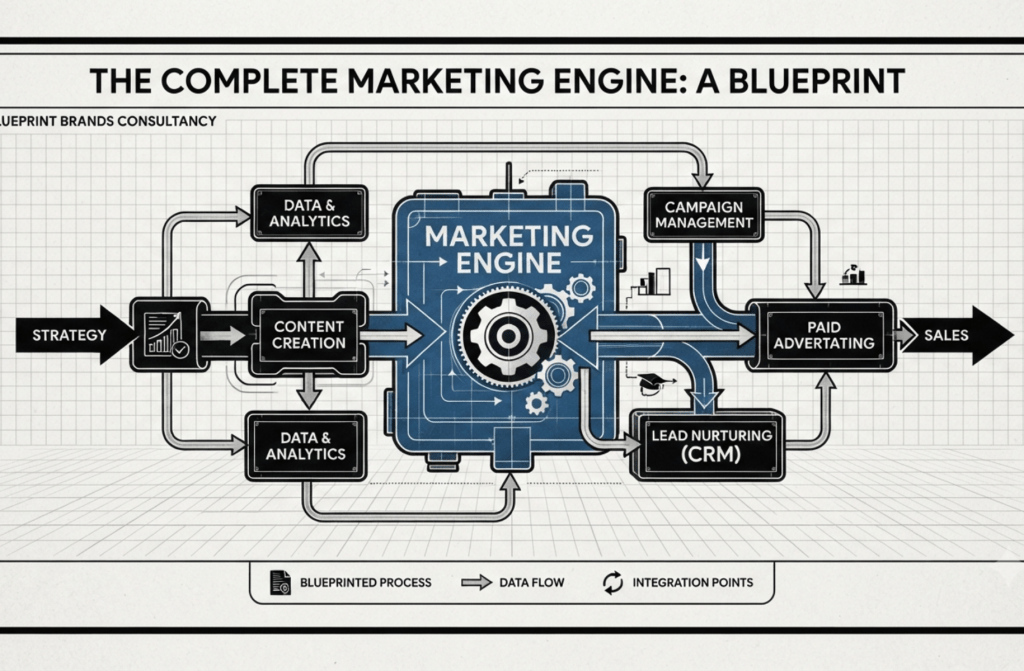
A campaign has a start and an end. A system runs. The advisors who are compounding are not the ones who did a big push last spring; they are the ones who built something that produces qualified conversations every month, whether or not anyone is thinking about marketing that week. Strategy, content, CRM, and paid working together, quietly, on a schedule.
Stop running campaigns. Build the engine.
Where to go from here
If any of this landed, it is probably because you already suspected it. The next question is what the engine actually looks like for a firm like yours, which channels, in which order, at what cost. That is a conversation worth having before you spend another dollar amplifying a foundation that is not there yet. Book a call with us a https://legacygrowth.life to learn more.




 Legacy Growth Blog
Leave a comment