
Every January, gyms fill up. Every February, they empty out. Everyone knows this pattern, and everyone believes they are the exception to it.
Business owners run the same pattern with their marketing, they just do it year round. A burst of motivation produces two weeks of daily posting. Then a client crisis hits, the posting stops, guilt accumulates, and three months later the cycle restarts with a new strategy, a new platform, and the same ending.
The problem was never the strategy. The problem is a mindset that confuses intensity with commitment.
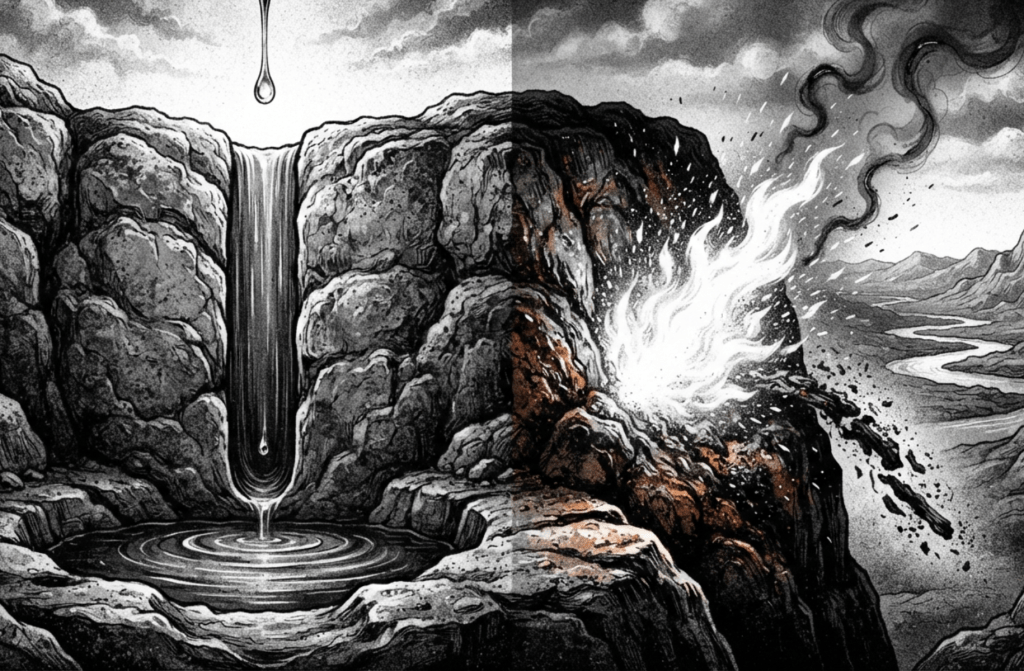
Intensity is a feeling. Consistency is a system.
Intensity feels productive because it is dramatic. Ten posts in a week feels like momentum. But algorithms, audiences, and trust all compound on the same variable, and it is not volume. It is reliability over time.
An audience that hears from you every week for a year trusts you in a way that an audience blasted for two weeks and then abandoned never will. Trust is built the same way it is built in any relationship: by showing up when you said you would, repeatedly, especially when it is inconvenient.
Here is the mindset shift underneath this. Intense people rely on how they feel. Consistent people rely on what they built. Motivation is a terrible employee. It does not show up on hard weeks, and hard weeks are exactly when your pipeline is quietly being decided. The owners who win do not have more motivation than you. They have systems that make motivation irrelevant.
Why smart owners still get this wrong
If consistency obviously wins, why do capable, disciplined people keep choosing intensity? Because intensity has a hidden payoff: it lets you feel finished.
A big burst of content creation gives you a sense of completion. You did the thing. You can check the box and get back to real work. Consistency offers no such relief. It is never done, and for high achievers who are wired to complete things, an infinite task feels like a design flaw.
The reframe that fixes this is simple but genuinely changes behavior: marketing is not a project, it is a utility. You do not complete your electricity. You do not finish payroll. You keep them running because the business runs on them. The owners who scale in 2026 treat their visibility the same way, as infrastructure that stays on, not a campaign that ends.
The math nobody wants to hear
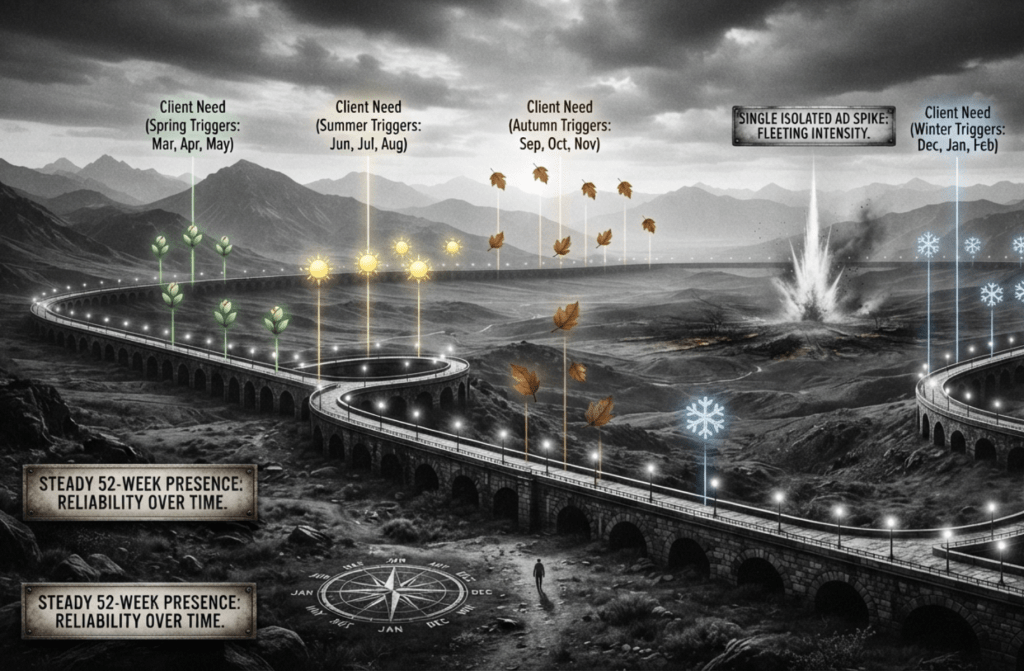
One more reason consistency beats intensity: the market does not remember your best week. It remembers your average presence.
A single brilliant post reaches whoever happened to be looking that day. Fifty two decent posts across a year intersect with every stage of your future clients’ timing. Somebody who was not ready in March is ready in September, and the only question is whether you are still there when their moment arrives. Intensity gambles everything on catching people at the right time. Consistency guarantees you are present whenever the right time happens to be.
This is also why consistency is the great equalizer against bigger competitors. You may not out-spend them. You can absolutely out-last them, because most of them are running the January gym pattern too.
Build the flywheel, not the sprint
Practically, consistency is not about doing more. It is about lowering the cost of each repetition until stopping feels harder than continuing.
That means batching creation instead of creating daily. It means capturing raw material once and cutting it many ways, one strong filming session becoming months of clips, posts, and stories. It means separating the roles: you supply the perspective, and a system, a team, or a partner handles the machinery of editing, scheduling, and publishing. The founders who post every week for years are almost never editing their own videos on Tuesday nights. They front-load the hard part and let the system carry the cadence.
Consistency, it turns out, is mostly a batching problem wearing a discipline costume.
The one-day version of a one-year habit
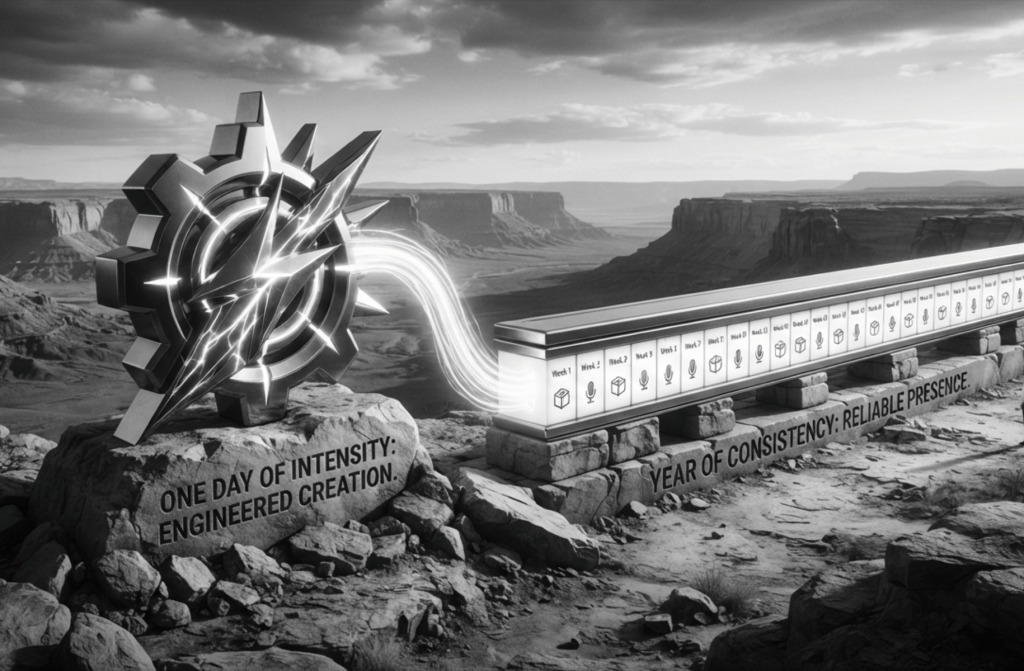
This is exactly the logic Content Day is built on. Instead of asking you to find creative energy every single week, we compress the creation into one day and let the consistency run off the library.
We come to you. A 45 minute brand identity interview surfaces the story and the angles. Then 2.5 hours of guided filming captures you talking about what you actually know, in your actual voice. Two weeks later, a full content library is back in your hands, enough raw material to stay visible for months without touching a camera again.
One day of intensity, engineered to fund a year of consistency. That is the trade successful owners make.






Leave a comment