


You ran the ads. You showed up on social. You sent the emails, maybe ran a webinar, maybe hired someone to sharpen the copy. Revenue is still not where it should be, so you do what most entrepreneurs do. You blame the marketing. You tell yourself the content is stale, the targeting is off, the offer needs reworking. You invest more time and more money into the front end while the real problem quietly destroys everything behind it.
Most service businesses do not have a marketing problem. They have a systems problem. And until you fix what is happening after someone raises their hand, no amount of front-end effort will stick.
The Lead You Worked Hard to Get Is Already Gone
Think about the last time someone filled out your contact form. What happened next? If your answer is anything other than an immediate, automated response, you are already behind.
The average buyer in 2026 is not comparing you to one competitor. They are comparing you to three or four, usually simultaneously. They found you, they found people like you, and they reached out to more than one. The first person to respond with clarity and warmth wins the conversation. Not the best offer. Not the most polished website. The fastest, most organized follow-up.
What most service businesses do instead: the lead hits a Gmail inbox, someone sees it when they have a moment, and they write back when they get to it. Sometimes that is within the hour. Often it is the next morning. Occasionally it is three days later. By then, the prospect has already had a first call with someone who had their infrastructure in order.
This is not a motivation problem or a work ethic problem. It is an infrastructure gap. And the gap costs real money every single week it exists.
What Broken Infrastructure Actually Looks Like on the Inside

We want to be specific here because this is where a lot of business owners check out. They hear “systems” and assume they need something complicated or expensive. The reality is usually much simpler and much more frustrating than that.
A broken infrastructure looks like this: contact form notifications go to a personal inbox, follow-up depends entirely on how busy the owner is that week, and any lead who is not ready to buy immediately drops off a cliff with no further contact. You have no idea what happened to the person who almost booked a call in February. You have no mechanism to re-engage the leads from your last launch that went cold. Every marketing campaign you run is filling a bucket that has a hole in the bottom.
It also looks like this: everything is manual. Every follow-up email, every re-engagement message, every booking reminder passes through you personally. On your best, most organized weeks, things run. On every other week, things slip. And when they slip, they slip quietly. No alert. No dashboard warning. Just a prospect who moved on and a revenue opportunity that evaporated.
We have worked with business owners who were genuinely good at marketing and still struggling to grow. Not because their content was weak or their offer was wrong. Because their backend was held together with duct tape and good intentions. No amount of strong front-end marketing compensates for a backend that loses people.
The Four Pieces Every Service Business Cannot Afford to Skip
We have built marketing infrastructure for enough businesses to be clear about what the non-negotiables are. Not what is nice to have eventually. What has to exist for a service business to capture the return on its marketing investment.
The first is a CRM that tracks the journey, not just the contact. You need to know where someone came from, what they have engaged with, what stage of the relationship they are in, and what the next action is. A spreadsheet is not a CRM. A tagged inbox is not a CRM. You need something that follows a person through their entire journey with your business and tells you what to do next.
The second is immediate response automation. When someone takes a meaningful action, something should happen within minutes. Not later that day. Minutes. A message that feels warm and personal, that acknowledges what they did and starts the conversation before any competitor has a chance to reply first.
The third is a nurture sequence for the people who are not yet ready. This is the piece most businesses skip entirely, and it is the most expensive skip. They treat every lead as either a buyer right now or a dead end. The middle segment gets nothing. Those people eventually buy from someone. It should be you.
The fourth is pipeline visibility. You need a real-time picture of how many leads you have, where each one is in the journey, and what needs to happen next. Most owners are flying on instinct. Actual data changes how you make decisions and how you catch problems before they become crises.
Why We Build on GoHighLevel
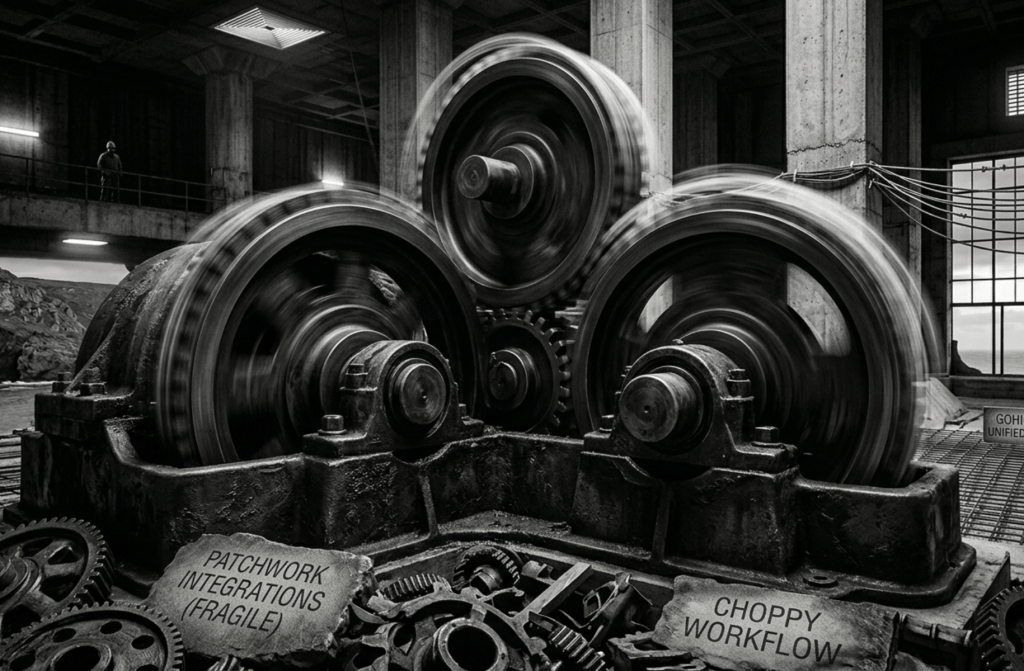
We are not platform evangelists. We chose GoHighLevel because it handles all four of those pieces inside one system, built specifically for service businesses and agencies. No patching together a CRM with an email platform with a calendar tool with a text messaging service and hoping the integrations hold.
That patchwork approach is what most businesses start with, and it always creates problems eventually. An integration breaks. Data fails to sync. A lead slips through the gap between two disconnected tools. Maintaining the whole thing requires ongoing technical attention that most business owners simply do not have.
A unified platform means the person who fills out your contact form at 11pm on a Friday gets an immediate, warm response. If they do not book a call from that first message, they go into a follow-up sequence. If they book and then cancel, there is a re-engagement flow waiting for them. All of it runs without you.
We have written about the importance of building businesses with structural durability over at Legacy Brands: Building Businesses That Outlast Algorithms. A business that depends on the owner remembering to follow up is not a resilient business. Systems are how you build durability into the parts of your business that cannot afford to be human-dependent.
What a Real Infrastructure Build Looks Like
When we take on a new client for systems work, we start with a map. Every stage of the buyer journey from first awareness to signed agreement. We trace where leads enter, where they go quiet, and what the business is doing, or not doing, at each transition point.
The build phase typically takes two to three weeks. We are constructing pipelines, writing automation sequences, integrating calendar and booking tools, configuring tagging and trigger logic, writing nurture email copy, and testing every single piece before we hand anything off. We document everything so the client understands exactly what they own and how it works.
What clients notice first is not a surge in new leads. It is that existing leads stop disappearing. People they spent real money to attract actually get followed up with. Consistently. Every time. That shift, simply closing the leak that already exists, changes the revenue picture for almost every business we work with.
The trust component and the systems component are not separate conversations. They are the same conversation. Read The Trust Flywheel: How Relationships Turn Into Predictable Revenue to understand why. Systems do not replace relationships. They protect them and extend them across timelines that manual effort simply cannot sustain.
The Cost of Another Week Without This
Every week you operate without a proper follow-up system is a week where a percentage of your leads go cold. Some of them find a competitor who responded within minutes. Some of them had questions that went unanswered and assumed you were too busy for them. These losses are not hypothetical. They are happening on every day you run without this infrastructure in place.
You should not have to become a marketing technologist to run a great service business. You should not have to understand automation logic, pipeline architecture, or CRM configuration to do what you do well. You need a partner who does, who will build it correctly, hand it off clean, and make sure you understand what you own.
That is the work we do at Legacy Growth. If your backend is broken, or you are not sure what you even have, reach out. Email us at hi@legacygrowth.life or visit legacygrowth.life. We will map what exists, identify what is missing, and tell you exactly what it would take to fix it.






Leave a Reply