
Many businesses believe revenue comes from transactions.
A lead enters the funnel.
A pitch is delivered.
A deal closes.
Then the process starts again from the beginning.
New leads.
New outreach.
New effort.
This model can work, but it keeps businesses stuck in constant acquisition mode.
The companies that scale more predictably tend to operate differently.
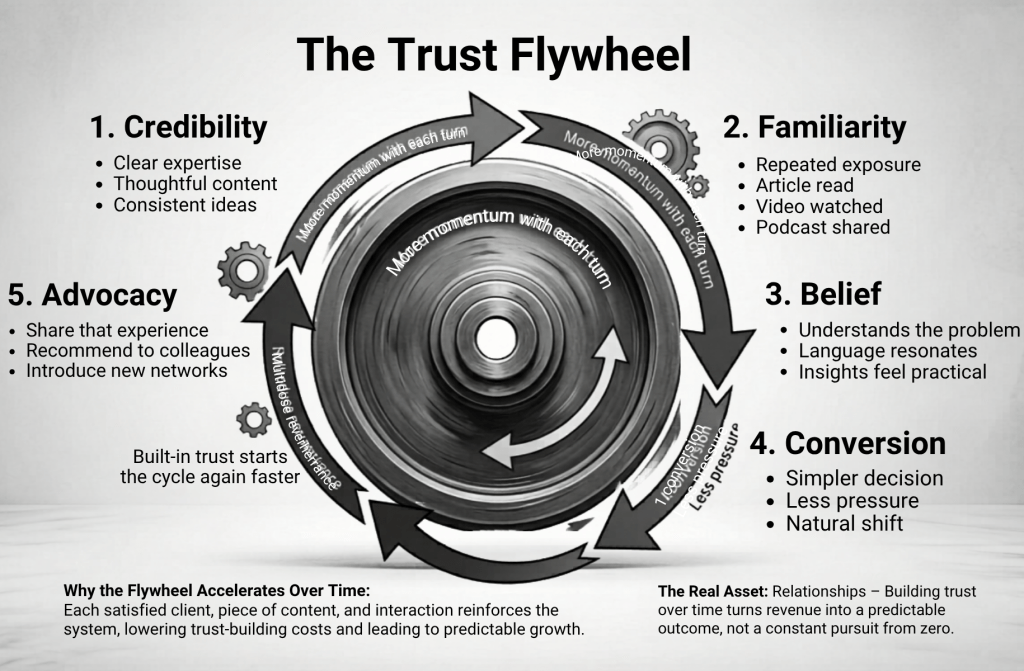
They build something that looks less like a funnel and more like a flywheel.
A system where trust builds momentum, and that momentum makes every future interaction easier.
The First Turn: Credibility
Every relationship begins with a simple question in the mind of the buyer:
Does this person know what they are talking about?
Credibility answers that question.
It appears through signals like:
Clear expertise.
Thoughtful content.
Consistent ideas.
Evidence of real experience.
When someone encounters a credible voice, the brain relaxes slightly.
The company no longer feels like a random option.
It begins to look like a serious contender.
Credibility is the first push that gets the flywheel moving.
The Second Turn: Familiarity
Credibility alone is rarely enough to trigger a decision.
People also need familiarity.
They want to see how a brand thinks.
How it communicates.
How consistently it shows up.
Familiarity develops through repeated exposure.
An article read here.
A video watched there.
A podcast interview shared by a colleague.
Each interaction strengthens recognition.
The brand begins to feel known rather than new.
And familiarity quietly reduces skepticism.
The Third Turn: Belief

When credibility and familiarity combine, something deeper begins to form.
Belief.
The audience starts to think:
This company understands the problem I’m facing.
They see their situation reflected in the brand’s ideas.
The language resonates.
The frameworks make sense.
The insights feel practical rather than theoretical.
Belief changes the nature of the relationship.
The brand stops feeling like an outside vendor.
It begins to feel like a guide.
The Fourth Turn: Conversion
By the time belief forms, the sales conversation has already shifted.
The prospect no longer needs to be convinced that the company understands their problem.
They already trust that foundation.
The decision becomes simpler:
Do I want this team helping me solve it?
Conversion in this stage often feels surprisingly natural.
There is less pressure.
Less persuasion.
The relationship already carries momentum from the earlier stages of trust.
The Fifth Turn: Advocacy
The flywheel does not stop once a client says yes.
In many ways, this is where its most powerful phase begins.
When clients experience real value, they often share that experience.
They recommend the company to colleagues.
They reference the work in conversations.
They introduce the brand to new networks.
Each referral carries something marketing campaigns cannot easily replicate.
Built-in trust.
The new prospect enters the relationship already believing the brand is credible.
Which means the flywheel starts spinning again, faster than before.
Why the Flywheel Accelerates Over Time

Traditional sales models require constant energy.
Every new deal starts with the same level of effort.
But the trust flywheel behaves differently.
Each satisfied client strengthens the brand’s reputation.
Each piece of thoughtful content expands credibility.
Each interaction increases familiarity with the audience.
Over time, the system begins reinforcing itself.
New leads arrive already aware of the brand.
Conversations begin with context rather than skepticism.
The cost of building trust decreases because trust already exists in the environment.
The Real Asset: Relationships
The most valuable outcome of the flywheel is not just revenue.
It is relationships.
When a brand consistently builds credibility, familiarity, and belief, it becomes part of a professional network.
Clients return.
Partners collaborate.
Audiences follow the thinking.
Revenue becomes more predictable because the brand is no longer starting from zero each time.
It is building on trust that already exists.
Final Thought
Most businesses focus on generating the next lead.
But long-term growth rarely comes from isolated transactions.
It comes from relationships that strengthen over time.
Credibility introduces the brand.
Familiarity makes it recognizable.
Belief builds trust.
Conversion turns trust into action.
Advocacy spreads that trust to others.
Each stage reinforces the next.
And with every cycle, the flywheel spins a little faster.
Until eventually, growth is no longer driven by constant pursuit.
It is driven by momentum.
Book Your Discovery Call
Most businesses do not struggle because they lack marketing tools.
They struggle because their growth systems were never designed to build trust and authority at scale.
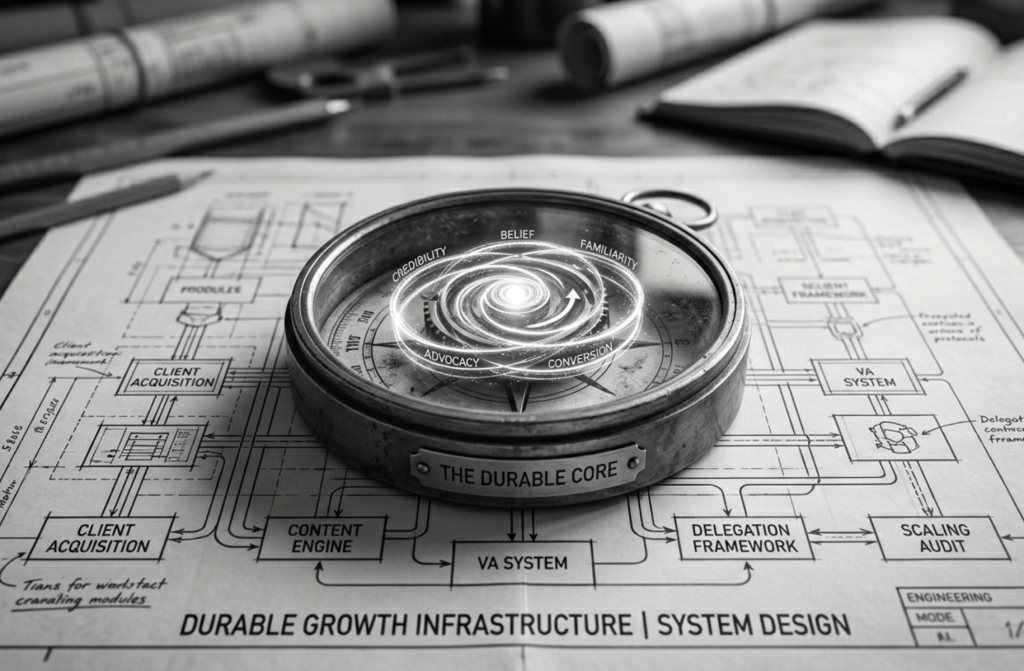
At Legacy Growth, we don’t sell hacks. We build durable growth infrastructure.
If you want your time back, your energy back, and your growth back, let’s talk.
➡️ Book a strategy call with LegacyGrowth.life
We’ll audit your current work structure, show you exactly what to delegate, and help you build a VA system that compounds.
No gimmicks. Just execution that actually works.







Leave a comment